Malawi faces both chronic and acute child malnutrition. According to Unicef, more than a third of children under five (approximately 35.5 to 37 percent) are stunted, reflecting long-term nutritional deficiencies, while wasting or acute malnutrition affects around 2.6 percent of children under five.
These figures are startling. And Mphatso Chitaukali has heard them for years.
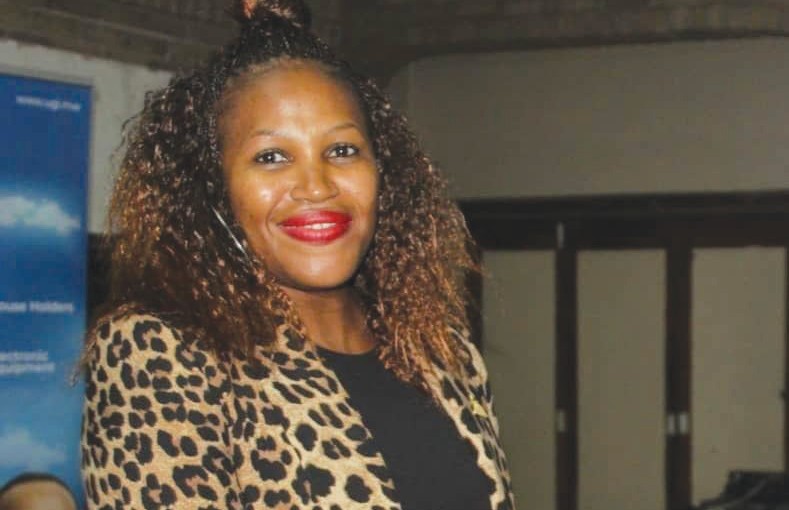
She has also learnt that malnutrition contributes to increased child morbidity and mortality, impaired cognitive development and long-term health consequences.
“From my primary school days, we were taught that one of the underlying causes was food insecurity. I said, ‘No, I can do something for my village with the little I was earning,’” she recalls.
That realisation pushed Chitaukali to support a few children with fortified porridge every morning in her home village in Mulanje District.
“I told myself that I didn’t need to wait for donors to come to my community and feed our children. I started doing that in 2020. During Covid-19, I went around villages in Mulanje identifying children who were in critical need because many families were struggling to put food on the table,” she says.
During her visits, she encountered children showing visible signs of malnutrition. Some were underweight, while others looked weak and lacked the energy expected of children their age.
By 2023, Unicef reported that more than 573 000 children under five in Malawi were at risk of malnutrition, with over 62 000 facing severe acute malnutrition.
“It became something I could not ignore. Every visit reminded me there were more children who needed help. So I started distributing porridge flour to households and for the children,” she says.
The initiative, however, soon faced an unexpected challenge.
“The flour had to be shared among everyone else in the family. It wasn’t really reaching the toddlers the way I wanted,” she explains.
That is when another idea crossed her mind.
Instead of giving up, Chitaukali thought about constructing a feeding shelter where children could gather every morning to receive nutritious porridge.
“I thought if I had one place where children could come every morning, I would be sure they were eating the food. I also realised I could reach many children at once,” she says.
It was from this idea that the 43-year-old registered Rising Star of Mulanje as a charity organisation in 2023.
But having an idea alone was not enough. She needed land where the children could gather every morning.
The answer came from her grandmother who offered part of her land so the feeding programme could have a permanent home.
“My grandmother believed in what I wanted to do. She wanted to see the children in our community grow healthy,” she says.
On that piece of land at Chipoka in Mulanje, Chitaukali built a modest feeding shelter that has since become a place of hope for hundreds of children.
Today, children gather at the shelter every morning, where volunteers prepare and serve fortified porridge.
The programme targets children aged between six months and five years, an age group Chitaukali believes is often forgotten despite being the most vulnerable to malnutrition.
She says the organisation deliberately leaves school-going children to established feeding programmes such as Mary’s Meals.
“We focus on feeding children in the villages because organisations such as Mary’s Meals are already feeding children in schools. We wanted to complement that by helping the little ones who remain at home,” she says.
Currently, Rising Star of Mulanje serves about 200 children every day from Lomo, Masanga and Mothiwa villages.
Running the programme, however, has never been easy.
Every two weeks, the initiative requires two bags of maize costing about K45 000, 60 kilogrammes of soya, 10 packets of sugar costing K5 000 each and salt.
The community must contribute charcoal or firewood, while volunteers prepare and serve the porridge every morning.
Apart from occasional donations of sugar or salt from well-wishers who discover the initiative through social media, almost every other expense comes from her own pocket.
“Everything has been coming from my pocket because of the passion I have. Sometimes people send us sugar or salt, but we have never received major support for maize, soya or groundnuts,” she says.
The programme survives largely because of her farming business.
“I don’t really have large pieces of land. I have land in Kasungu, Mponela and Lilongwe where I grow crops and I also buy produce from farmers to meet my targets. The costs are usually higher at the beginning because you have to source seed, but it becomes easier with time,” she says.
Limited resources have also affected the quality of the meals.
Groundnuts, once an important ingredient in the fortified porridge, had to be removed because the organisation could no longer afford them.
“We now mainly use maize flour mixed with soya because that’s what we can manage,” she says.
Like many community-based organisations, Rising Star of Mulanje has experienced periods when feeding stopped because supplies ran out.
“Sometimes we are forced to suspend the programme because we don’t have enough ingredients. That remains our biggest challenge,” she says.
Despite the setbacks, Chitaukali says seeing children regain their health keeps her motivated.
Born in Blantyre in 1982, Chitaukali grew up in Nkolokosa Township, where she says her passion for helping others first took root.
The single mother attended Manja Primary School before proceeding to Zingwangwa Secondary School, all in Blantyre.
She later enrolled at the Malawi Institute of Tourism, where she studied hospitality.
After completing her studies, she worked for five years at ITS, a British firm.
“This helped me raise resources to start farming,” she says.
She is currently studying with the BSY Group in the United Kingdom, pursuing a Health Care Foundation course.
“I enrolled because I wanted to expand my knowledge in healthcare, especially in toddlers. The more I learn, the better I can serve these children,” she says.
But she believes the initiative has only scratched the surface.
“I dream of expanding beyond Mulanje,” she says.
Last year, she travelled to Thondwe in Zomba District to assess the possibility of establishing another feeding centre.
“But our plans are to do this for as many children as possible. We want to be in all the districts,” she says.
She believes malnutrition is a national challenge that requires community-driven solutions alongside government interventions.
“No child should go hungry simply because they were born into poverty,” she says.
Currently, the initiative employs 10 people who help coordinate daily operations at the feeding centre.
They organise feeding sessions and look after the children every morning.
Beyond the paid workers, members of the community have also formed a voluntary committee that helps with cooking, collecting firewood and ensuring the programme runs smoothly.
She says the volunteers’ commitment demonstrates that communities themselves can become part of the solution when given an opportunity.