Sovereign Metals Limited, a company that owns Kasiya Rutile and Graphite Project in Lilongwe says it will complete its definitive feasibility studies (DFS), a key step in mining activity, in the first quarter (Q1) of 2026.
In its Quarterly Activity Report for the third quarter (Q3), the miner highlighting key achievements during the quarter and planned activities in the coming months.
Reads part of the report: “Various new workstreams are being adopted into the definitive feasibility study, with completion expected in the first quarter of 2026.
“These include enhanced focus on plant design and configuration and environmental and social impact workstreams.”
Meanwhile, the company has said it will continue to update stakeholders regarding progress, including mineral resource update, active discussions with US-based and “allied-nation” off-takers of rutile and graphite, environmental and social impact assessments and infrastructure and logistics planning.
Key highlights of Q3, according to the report, include completion of the selection of mining equipment designed for large-scale dry mining operations at Kasiya following the successful 2024 pilot phase and Japan’s investment commitment of the Nacala Corridor infrastructure that strengthened the strategic position of the Kasiya Project.
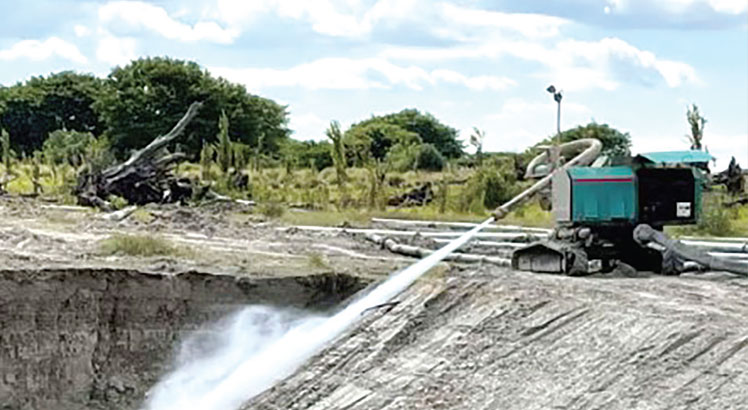
Graphite Project in Lilongwe. | Grace Phiri
It said the decision for dry mining operations followed the successful 2024 pilot phase, which confirmed that Kasiya ore can be efficiently mined using conventional dry mining techniques, among others.
“The dry mining approach, detailed in the optimised prefeasibility study, will deliver superior project delivery, operational flexibility and environmental outcomes.
The DFS, according to experts, is a key step in mining because the next steps are securing financing and obtaining necessary permits, followed by front-end engineering and design and mine construction.
In an interview yesterday, mining expert Ignatius Kamwanje described the DFS as the bankable study, which is meant to convince financiers and potential buyers or off-takers, a situation which opens the doors for actual mining development.
He said: “The definitive feasibility study provides the detailed economic and technical data needed to secure funding while subsequent phases focus on the practical steps required in building and operating the mine.
“Actually the DFS is a bankable study because it contains the necessary information to present to investors and lenders, such as banks, to raise the capital for mine development.”
Recent tests by Japan-based Toho Titanium Company have confirmed that natural rutile from Kasiya Rutile Graphite Project in Lilongwe is suitable for producing high-performance titanium metal products.
It also came after a German firm ProGraphite and Dorfner Anzaplan in February this year confirmed Kasiya Rutile Graphite Project for having high-quality minerals.
Geologist and former minister of Energy Grain Malunga has since reiterated the need for the country to make serious investments in the extractive industry, calling for development of laboratories as the sector booms.
“We have to find ways of raising money to have these facilities like laboratories in place and we can leverage current mining projects,” he said.
In July last year, Ministry of Natural Resources, Energy and Mining signed two mining development agreements with Lotus Resources Limited, owners of Kayekelera Uranium Mine in Karonga and Lancaster Exploration Limited for the Songwe Hill Rare Earth Project in Phalombe District.
Sovereign Metals Limited’s Kasiya Rutile Project has a 25-year life span.