For special needs pupils like Alice Kakhobwe, access to education is not a right but a nightmarish struggle against systemic neglect.
Alice, who comes from Mandala Village in Lilongwe, lost both her parents at the age of six. She was not born physically challenged, but a severe bout of malaria in Standard Six tragically robbed her of her hearing.
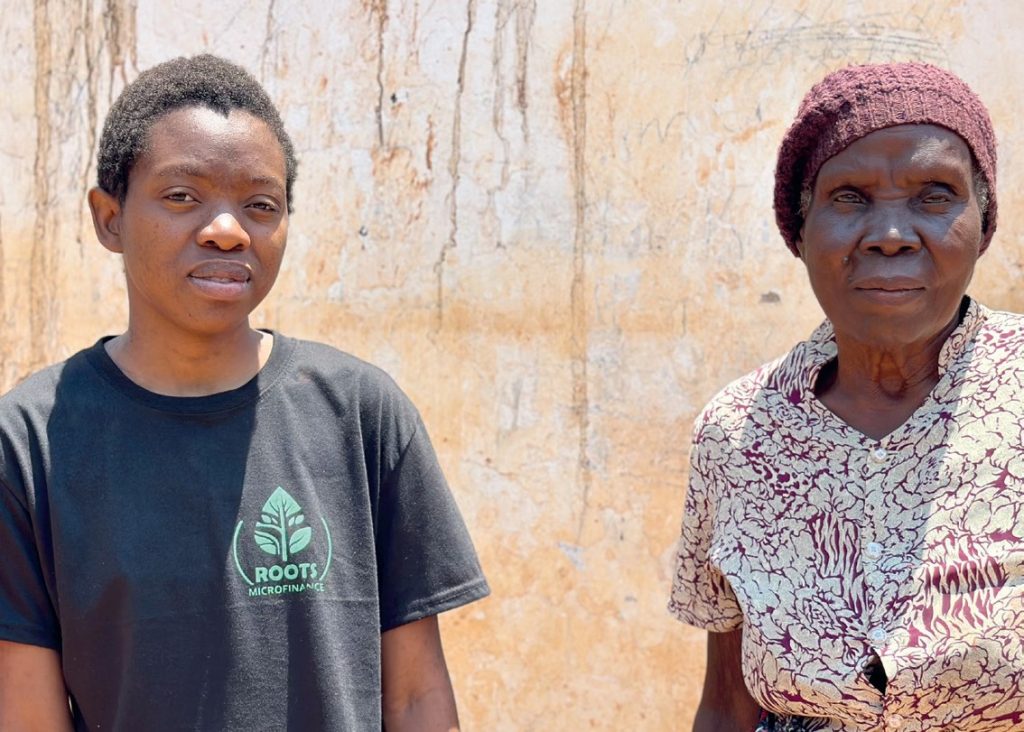
Her grandmother, 77-year-old Mary Moffat, sent her to Mua School for the Deaf where Alice eventually failed her Primary School Certificate of Education (PSCLE).
Speaking through an interpreter, Alice recounted spending days without food at Mua, often relying on Catholic sisters for rescue.
“She liked her time at Mua because she was with pupils that had similar needs,” Moffat said.
“But I struggled to pay her fees. When she failed the examinations, she refused to repeat. Alice complained about the learning conditions at Mua.”
Alice’s struggle is a perfect example of a national crisis: children requiring special needs education are increasingly dropping out of school and left to wander in their communities.
Special needs learners, who are categorised as those with low vision, blindness, deafness, physical impairment, learning difficulties, and albinism, form about four percent of total primary school enrolment.
While enrolment has steadily increased from 175 051 in 2018 to 216 806 in 2025, the dropout rate is on the rise, with approximately two per cent of these learners dropping out annually.
The primary driver of this exodus is dire poor funding.
Special needs schools across the country are financially decimated, with government subvention often running out mid-month and frequently being remitted late.
School authorities decry the paltry allocations, which are required to cover food, staff salaries, utility bills, and maintenance.
For instance, Mua School for the Deaf in Dedza, the only Central Region institution accommodating 188 learners with hearing and speaking impairments from 12 districts, receives a monthly subvention of K600 000.
Mountain View School for the Deaf in Thyolo, accommodating 146 learners, receives K560 000 whereas Malingunde School for the Blind in Lilongwe receives K600 000.
Mua School head teacher Henry Chiwaya noted that the allocation runs out long before the month ends.
“There are instances, especially towards the end of a school term, when we run out of food supplies. Learners go hungry because we do not have any other option. We rely entirely on well-wishers,” he said.
This meagre funding contrasts sharply with allocations for general education: our investigation found that monthly subvention to day secondary schools stands at K1 million, while most boarding schools receive about K2 million.
Despite the bleak reality, schools like Mary View School for the Deaf in Chiradzulu, which receives K500 000 monthly, sometimes achieve a 100 per cent PSCLE pass rate, a testament to the dedication of teachers in the face of immense adversity.
Executive Director for the Federation of Disability Organisation in Malawi (Fedoma) Simon Munde has since said inclusive education has been ignored for too long, noting that their assessment shows about 20 special needs schools are insufficiently funded.
“There is need for immediate intervention to increase allocations and include them on the Department of Disaster Management annual food response schedule. We are worried about the discrepancies in the allocation of subventions in special needs schools compared to other schools. This must change if we are serious with education,” Munde asserted.
Educationist Benedicto Kondowe agreed, emphasizing that the funding gaps prohibit inclusive education.
“The cost of food items is high and there is little K500 000 can do for a population of over 100 learners in a month,” he said, urging the government to review funding and invest in training more special needs teachers.
Ministry of Basic Education spokesperson Christopher Kapachika Banda acknowledged the funding challenges. He explained that operating and management budgets are facilitated by district councils in conjunction with district education offices.
Kapachika Banda insisted that the government is undertaking several interventions, including enhancing the finance policy through providing additional factors to the disbursement formula.
He also cited the procurement of specialised teaching and learning materials worth K650 million in 2023/24 and K1 billion in 2024/25.
However, he conceded: “The funds are not adequate due to the increased number of students in schools against individual needs.”
Government’s position is in contrast to its own 2017 inclusive education policy, which promised to remove barriers and guarantee equitable access to quality education for all children.