The tea industry faced mixed fortunes in 2024 with production increasing slightly to 46.3 million kilogrammes (kg), but declining prices undermined total revenues.
Data contained in the Reserve Bank of Malawi (RBM) Report and Accounts for the Year Ended December 31 2024 shows that tea output increased by 0.8 percent to 46.3 million kg in 2024, but the sector was affected by continued decline in prices.
Reads the report in part: “Similarly, the volume of tea sold saw a marginal growth of 1.5 percent, reaching 5.5 million kilogrammes compared to 5.4 million kilogrammes in the previous year.
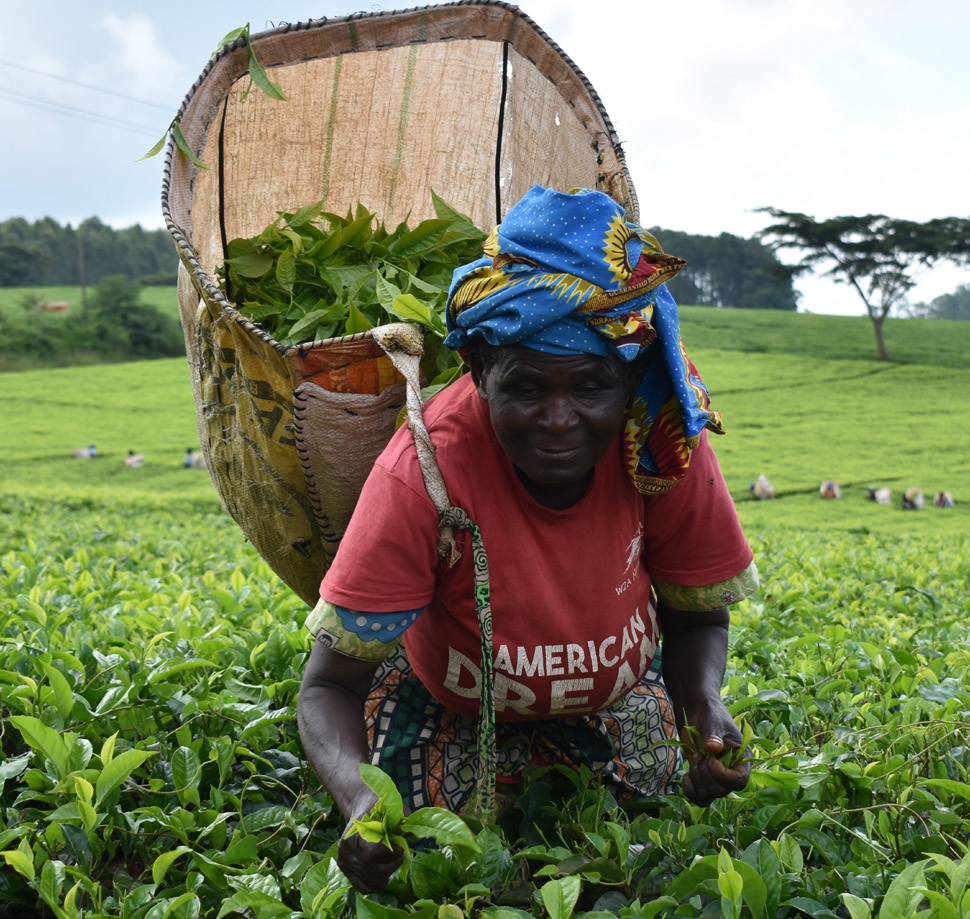
in Mulanje District. | Nation
“However, tea prices dropped by 5.3 percent and averaged $1.23 [about K2 153] per kilogramme in 2024 from an average of $1.30 [about K2 276] per kilogramme in the preceding year.
“Consequently, tea sales proceeds declined to $6.8 million [about K11.9 billion] in 2024 from $7 million [about K12.3 billion] generated in 2023.”
While attributing the increased production to favourable weather conditions, Tea Association of Malawi Limited chief executive officer Tonda Chinangwa said the quoted earnings are based on auction prices, which are way below export earnings after value- addition.
He said: “In 2023, total tea production was 43.3 million kg and in 2024, total tea production increased to 49.7 million kg. The increase in tea production was due to favourable weather conditions, especially good rainfall.
“In 2023, total tea exports were 42.5 million kg with value of over K73.4 billion while in 2024, total tea exports were 41.7 million kg with K111 billion.”
Chinangwa said the prices were from direct auction prices, excluding the real export value after value- addition through blending, among others.
“The real export earnings would, therefore, exceed the above estimated values,” he said.
In a separate interview on Tuesday, Trust Africa programme officer Beatrice Makwenda, whose firm is a key tea industry stakeholder that advocates for better collaboration between workers and companies, attributed the improved production to current efforts to strengthen smallholder institutions.
She said: “The tea sector is decisively working towards improving both production and productivity by strengthening smallholder institutions and creating a conducive environment for social dialogue.
“In 2021, the tea sector welcomed a partnership under Reclaim Sustainability Programme, which has supported the sector to engage with government for support towards production, market and advancing decent work.”
Makwenda said the changes in industry practice coupled with research programmes targeting modern varieties and technologies, will result in ethical tea production, which will sustain current markets and open new opportunities.
Tea Association chairperson Sangwani Hara told a tea testing event in London, United Kingdom last year that enhanced trade can provide a good alternative to aid and development assistance through increased exports of products like tea.
He said: “With increased tea imports from Malawi, British tea drinkers will be allowed to consume a great product at a fair price while contributing to Malawi’s and tea estates’ foreign exchange earnings and development agenda.”
Tea is one of Malawi’s foreign exchange earners, contributing about eight percent to forex earnings and 11 percent to national employment.
The local tea industry employs about 60 000 temporary and permanent workers.