Village clinics bring life saving malnutrition treatment within walking distance for families in rural Dedza, freelance journalist DUMASE ZGAMBO-MAPEMBA reports:
Daniel Mandevu and her neighbours in remote parts of Bembeke in Dedza District rely on Nadzikhale Village Clinic to access essential healthcare.

Mandevu has seen firsthand how the village clinic blends treatment of severe wasting without complications into the Integrated Community Case Management (ICCM).
The initiative supports community healthcare workers to treat uncomplicated malaria, pneumonia and diarrhoea in children.
Before the integration, mothers used to walk long distances with their children to Bembeke Health Centre to access care for severe acute malnutrition, which required weekly visits to replenish ready-to-use therapeutic food (RUTF)
Mandevu recalls: “The long distances demanded transport money and more time away from home, causing some to miss weekly appointments and putting children at greater risk.
“With the integration, caregivers now access RUTF and weekly routine medical assessments within their community. Only patients with complications are referred to the health centre or district hospital.”
At the village clinic, Mandevu welcomes caregivers, screens children for severe illness and refers those found with danger signs for further medical attention.
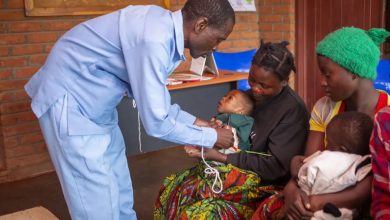
After giving a brief health talk, he conducts nutrition checks by measuring and recording babies’ middle upper arm circumference (Muac), height and weight to monitor each child’s recovery.
“Children who do not show signs of recovery are given Rutf and scheduled to return for review the following week,” he says.
Unicef supported the training of health workers on how to manage Rutf management and supplied secure storage boxes to protect the stock.
Health surveillance assistants work with community health committees to keep an eye on the peanut butter supplement for treating severe malnutrition, with both parties present when opening or closing the two-lock RUTF boxes.
The integration, coupled with technical mentorship and supportive supervision, enables community healthcare workers such as Mandevu to deliver quality primary healthcare in remote settings.
During the visit, Stella Chale was getting Rutf for her two-year-old daughter Trinity at the village clinic near her home.
The child was previously admitted to Bembeke Health Centre for severe acute malnutrition treatment.
To Chale, accessing severe malnutrition treatment in her community has eased the financial burden on her family.
“Accessing Rutf for my child together with care for all other common illnesses at the village clinic has saved me a lot of money because travelling to Bembeke is costly,” she states.
The village clinic has also strengthened follow‑ups for children recovering from severe acute malnutrition.
Previously, many caregivers stopped visiting the health centre once a child appeared to improve, leading to missed treatment and stalled recovery.
At another clinic in Msesa Village in the district, families tell similar stories.
“Treatment of severe wasting is now only a short walk away. My child is getting much better now. Having RUTF close to home has made life much easier,” says Enifa Libelito of Mkungumbe Village.
Her three-year-old daughter Diana was previously referred to Bembeke for severe acute malnutrition treatment, but the two-hour journey often prevented her from completing the recommended sessions.
Health surveillance assistants mentor volunteers to correctly identify malnourished children, encourage them to seek care without delay and deliver nutrition messages.
Judith Jalakasi, a community volunteer, says: “Previously, many children reached Bembeke Health Centre only after becoming seriously ill because it is very far.
“During my routine community visits, I can identify children who need medical attention, counsel caregivers and refer them before the situation becomes critical.”
Dedza District Integrated Management of Childhood Illness coordinator Brian Sibande says village clinics have strengthened collaboration between community healthcare workers, community volunteers and health facilities, ensuring children receive timely care closer to home.