Malawi’s climate crisis is tightening its grip on the economy that feeds its people.
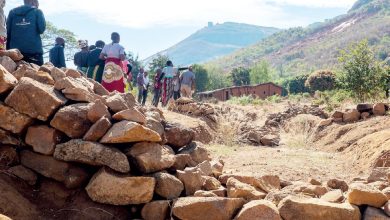
Rising temperatures, erratic rainfall and severe land degradation continue to erode agricultural productivity, deepening food insecurity for millions of households.

With global temperatures expected to rise by between 1.5°C and 2°C by 2050 and land degradation threatening 3.2 billion people worldwide, Malawi remains among the most exposed nations.
But a once unlikely solution is taking root: turning restored land into a profitable export.
A new market for resilience
The country is positioning itself to tap into carbon markets, a growing global system in which countries and private entities earn revenue by reducing or removing carbon emissions.
For Malawi, this means transforming degraded farmland into productive, tree-rich landscapes that store carbon while boosting food security.
Government reforms, community mobilisation and private-sector partnerships are unlocking one of the most ambitious landscape restoration efforts in Africa.
Malawi is a lead country in the Restore Africa programme, the world’s largest community-led restoration initiative, operating in Malawi, Kenya and Uganda. Significant investment is already flowing, and interest among farmers is rising fast.
Farmers embrace a new economic asset: trees
Juma Masumba, a technical advisor on carbon and markets with Restore Africa, said rural communities have long recognised declining soil health and are eager for change.
“These deep-rooted nitrogen-fixing trees improve soil fertility through their leaves, and over time farmers reduce the amount of fertiliser they must buy,” he explained, citing Mtangatanga and Msangu as examples that naturally replenish nutrients.
He believes the biological improvement approach offers lasting relief in a country where imported fertiliser has become increasingly prohibitive.
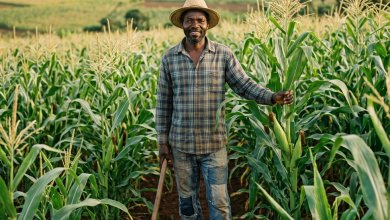
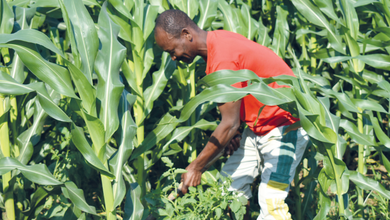
The shift is already visible on the ground. In Mzimba, farmer Amon Chibaka has planted 80 trees and reports reduced input costs.
“I have planted 54 Mtangatanga (Albizia lebbeck) and 26 Msangu (Faidherbia albida) trees,” he said. “Already, we are benefiting from firewood and I expect to use less fertiliser in the long-term because these trees produce a lot of leaves that improve the soil.”
In Zakeyu Mtambo Village in the same district, Juliana Moyo purchased her own seed when delivery delays threatened the planting season, a gesture that reflects strong ownership and belief in the project.
“Farmers are not just planting they are protecting and replacing the trees. It shows that they value them,” she said.
Trees are being treated not as obstacles, but as productive assets, supplying firewood, shade, and soil rehabilitation, while also yielding better results all while quietly building a new revenue stream.
Turning nature into revenue
The business proposition is clear. Under Article 6 of the Paris Agreement, verified carbon reductions or removals from activities such as reforestation become tradable carbon credits.
Malawi’s Carbon Market Framework strengthens investor confidence by outlining how benefits are shared and communities protected.
Carbon registration with Gold Standard, one of the world’s most respected certification systems, is already in progress.
Farmers such as Violet Kumwenda are hopeful.
“These trees will one day provide timber for building, herbal remedies, and feed for our cattle,” she said. “By registering them for carbon markets, we hope to earn money in the future to support our families, including school fees for our children.”
Serious investment fuels rapid scaling
Behind this effort is Climate Asset Management, a joint venture between HSBC Asset Management and Pollination. It has invested an initial US$150 million regionally into Restore Africa, with approximately $20 million (about K35 billion) channelled into Malawi so far.
Jonathan Thomas, chief of party for Restore Africa, said growth has exceeded expectations.
“We have a target of 220 000 farmers by 2027, and after one year of active recruitment we are already about halfway there,” he said.
“Around 70 percent of the farmers who have signed up are women, which is key because they are central to household nutrition and often carry most of the burden in the field.”
The programme spans seven districts, engaging more than 120 000 farmers and planting or managing about nine million trees across 220 000 hectares of land.
Participation is voluntary, guided by free, prior and informed consent. Even so, retention remains high a signal that farmers see potential value in staying the course.
Long-term patience, long-term payoff
Carbon markets operate over extended timelines. Trees must be protected for as long as 30 years to generate saleable credits, and earnings rise as biomass increases. Risks persist including price fluctuations and the need for continuous monitoring, but the long-term returns could help stabilise rural livelihoods.
For Malawi, the timing aligns with urgent national priorities. The country is pushing to diversify exports beyond tobacco and reduce dependence on foreign aid and imported inputs.
Carbon finance represents a credible pathway to earn foreign exchange by restoring natural capital rather than depleting it.
Managing the unavoidable, avoiding the unmanageable
Climate finance does not eliminate existing challenges. Governance gaps, shifting weather patterns and carbon price uncertainty require constant vigilance.
But early signals strong community adoption, private investment and policy clarity suggest the opportunities may outweigh the risks.