Malawi has placed itself firmly at the centre of the debate on reforming the World Trade Organisation (WTO), calling for a system that works for developing countries and reflects real economic inequalities.
For Malawi, the issue is not whether the WTO should be reformed, but how. At the just ended WTO 14th Ministerial Conference (MC14) in Yaounde, Cameroon, Malawi said it is pushing for a development-focused approach that protects vulnerable economies and ensures fairness in global trade.

At the heart of Malawi’s position is a strong defence of special and differential treatment (SDT).
Malawi made it clear at the conference that this principle is non-negotiable, stating that SDT is not a concession, but a necessary right that recognises the country’s structural constraints.”
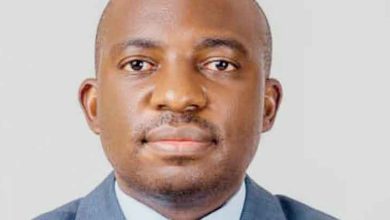
“Reforms must not deepen existing imbalances, but instead address the structural challenges faced by poorer nations,” said Minister of Industrialisation, Business, Trade and Tourism Simon Itaye, who was at the conference.
A system under pressure
Malawi’s concerns come at a time the global trading system itself is under strain. The WTO, created in 1995 to provide rules and stability in global trade, is now facing multiple challenges.
WTO director-general Ngozi Okonjo-Iweala acknowledged the scale of the problem, warning that “it is no secret that the world trading system is experiencing the worst disruptions in the past 80 years”.
She conceded that uncertainty is rising due to geopolitical tensions, conflicts and shifting economic power while key functions are struggling at a time negotiations have stalled while the dispute settlement system has been partly paralysed since 2019.
Okonjo-Iweala pointed to declining compliance with transparency rules, noting that subsidy notifications have dropped significantly.
She said: “Lack of transparency leads to a lack of trust and that breeds suspicions of unfairness and anti-competitive behaviour.”
Why reform matters for Malawi?
Itaye said for Malawi, WTO reform is not just about fixing an institution, it is about safeguarding development.
He pointed out that agriculture, which is central to Malawi’s economy, remains one of the most contentious issues in global trade and that the country is pushing for reforms that address imbalances in agricultural support and allow developing countries to protect food security and support small farmers.
Said Itaye: “The WTO reform has been a long-standing demand of developing countries since the Uruguay Round. Malawi supports a WTO reform which is development oriented, member-driven, inclusive, transparent and responds decisively to imbalances and structural concerns of vulnerable Members.
“We caution against a reform which entrenches existing asymmetries or legitimises exclusionary approaches in conducting WTO work. A truly level playing field must take into account the differing levels of development, capacities and structural constraints.”
Business warning: Reform cannot wait
While Malawi is calling for fairness, the business community is warning that time is running out.
The International Chamber of Commerce (ICC) issued its call for urgent reform, arguing that the WTO is already losing effectiveness.
“The system is not intact. And preserving an appearance of stability is not the same as preserving the system,” said ICC secretary general John Denton.
According to the ICC, trade policy uncertainty has surged to 10 times its historical average, while the share of global trade under WTO rules has fallen from 80 percent to 72 percent in recent years.
Denton said: “This is not a theoretical concern. It is the lived reality of companies in every region.”
The ICC warns that failure to act could have serious economic impacts.
ICC data show that the collapse of the WTO could reduce gross domestic product in developing countries by over five percent, with even higher losses in regions such as sub-Saharan Africa.
Cautious progress
Balancing these competing demands is the WTO reform facilitator, Ambassador Petter Ølberg of Norway.
His approach focuses on building consensus among the WTO’s 166 members.
Rather than pushing for rapid, sweeping reforms, the facilitator has proposed a structured work plan covering key areas such as decision-making, development, and fairness.
The plan calls for continued discussions after MC14, with clear timelines and checkpoints. It reflects an understanding that reform will take time and require compromise.
Ølberg noted that while the draft reform framework seeks to balance different perspectives, “further drafting alone will not resolve” the differences among members.
A system at a crossroads
Meanwhile, the Parliamentary Conference on WTO, a joint initiative of the Inter-Parliamentary Union and the European Parliament, has called for comprehensive reform across all core functions of the organisation, including restoring a fully functioning dispute settlement system, strengthening the development dimension and advancing work on digital trade.
It also calls on ministers to provide clear political direction and to agree on a credible roadmap for reform beyond MC14.
In its outcome document adopted on March 25 2026, it said it recognises the need to reflect on conditions that would render easier the integration and encourage the continuation of inclusive, transparent and open-ended dialogue on plurilateral initiatives, in accordance with the multilateral framework of the WTO.
Reads the document in part: “[We] call upon WTO members to reflect on a way to develop a new system whereby a single member or a group of non-participating members cannot block closer cooperation in a plurilateral initiative…
“[We] regret the delay in agricultural outcomes and emphasise the need for the establishment of a permanent solution for developing nations to manage stockholding as soon as possible while promoting a legislative framework to improve global food security…”
Fixing what works and what doesn’t
For WTO leadership, the challenge is to reform the system without losing its core strengths.
Okonjo-Iweala emphasised that the WTO still plays a vital role in global trade.
She pointed out that about 72 percent of global trade is still conducted under WTO rules, providing a level of stability despite growing uncertainty.
She also highlighted the achievements of the system, noting that trade has helped lift 1.5 billion people out of poverty.
However, she was clear that reform is necessary, adding that “not much has changed in the organidation’s rules and governance” over the past 30 years, which has led to tensions and mistrust.
While calling on members to act decisively, she stressed that reform must be driven by political will.