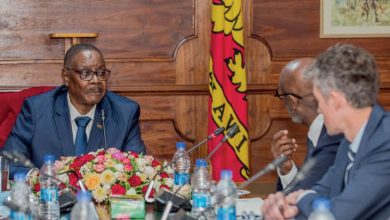
ActionAid Malawi and National Association of Smallholder Farmers in Malawi (Nasfam) have bemoaned poor agriculture sector growth despite huge resources being pumped into the sector.
According to a joint agriculture sector budget analysis for the 2022/23 National Budget, presented today before the parliamentary committee on agriculture, the allocation to mainstay agriculture in the current budget represents 10 percent of national budget thus barely conforming to the Comprehensive Africa Agriculture Development Programme (CAADP) which is Africa’s policy framework for agricultural transformation, wealth creation, food security and nutrition, economic growth and prosperity for all.

In the K2.84 trillion 2022/23 budget, presented a fortnight ago by newly-appointed Finance Minister Sosten Gwengwe, agriculture, water development and climate change ranks second from education – a trend that has been maintained for the past 6 years.
The sector has been allocated K447.7 billion (15.8 percent of total budget up from 14 percent in the last financial year) – up by 36 percent from the K284.4 billion approved in 2021/22.
Making the presentation, Nasfam head of policy and communication Beatrice Makwenda said the mainstay agriculture sector has been allocated K286 billion, covering K271 billion for Ministry of Agriculture and for local councils.
“However, the sector failing to meeting the 6 percent agriculture Gross Domestic Product (GDP) growth despite meeting the CAADP target,” she said.
According to Makwenda, structural bias in the sector’s budget, inefficiencies in implementation of various programs and misallocation of resources to less impact programs among the reasons behind poor agriculture sector growth rate.
According to figures presented during the event, in 2021, the sector registered a 0.2 percent decrease in growth from 3.4 percent recorded in 2020.
Makwenda told parliamentarians that the decrease was as a result of a drop in the output of some crops such as millet, sorghum, groundnuts, cotton, sesame, wheat due to seed scarcity and late delivery of Affordable Input Program (AIP) inputs in some areas, a situation which delayed access to inputs thereby affecting the yield.
In 2022 and 2023, agriculture sector growth is being projected at 3.0 percent and 2.9 percent, respectively, due to implementation of various projects, Makwenda said.
On a positive note, Makwenda said there has been a shift in the budget structure from consumption-oriented to investment-oriented, stressing that 50 percent of the budget is to carter for development – up from 27 percent share of last year.
She also said donor funded projects have now account for 48 percent, up from 25 percent in the 2021/22 budget.
However, he lamented that AIP alone has claimed 85 percent at K109.5 billion, of the total Other Recurrent Transactions (ORT) budget, adding that inefficiencies in management of the program exacerbating poor performance of the sector’s budget.
The budget analysis of the 2022/23 agriculture budget was commissioned by Nasfam and ActionAid who are part of the partnership for Social Accountability (PSA) Alliance and are implementing a project titled ‘Strengthening Social Accountability and Oversight Capacity for Rights-based Public Resources Management in Health and Agriculture in Southern Africa
PSA Project Manager for ActionAid Wales Chigwenembe said the budget analysis aimed at assessing the extent to which the national budget build resilient agriculture systems including merits and possible knock-on effects on the sector in terms of timeliness of financing and effect on program delivery.
“The analysis will help to inform different stakeholders on the gaps and priorities that the government has set in the upcoming financial year,” he said.
Meanwhile, both Nasfam and ActionAid have hailed the reduction of withholding tax that is deducted at the auction floors when farmers sale more than 10 bales of tobacco, saying the move will slightly increase disposable income for tobacco farmers and reduce burden that comes with claiming the tax refund.
The two institutions have also commended government for reducing minimum value addition requirement (local content) to make it easier for local manufacturers to enter into the Industrial Rebate Scheme where import duty and excise tax is not paid on raw material.