When Nyasa Big Bullets lifted the Castel Challenge Cup following a 2-1 victory over Goshen City Dedza Dynamos on February 21, it marked more than just another trophy celebration.
It was the club’s 38th trophy since 1986 when they first won the Gillet Nacet National Super League and the 19th major title in 12 seasons of sustained dominance that has redefined excellence in Malawi football landscape.
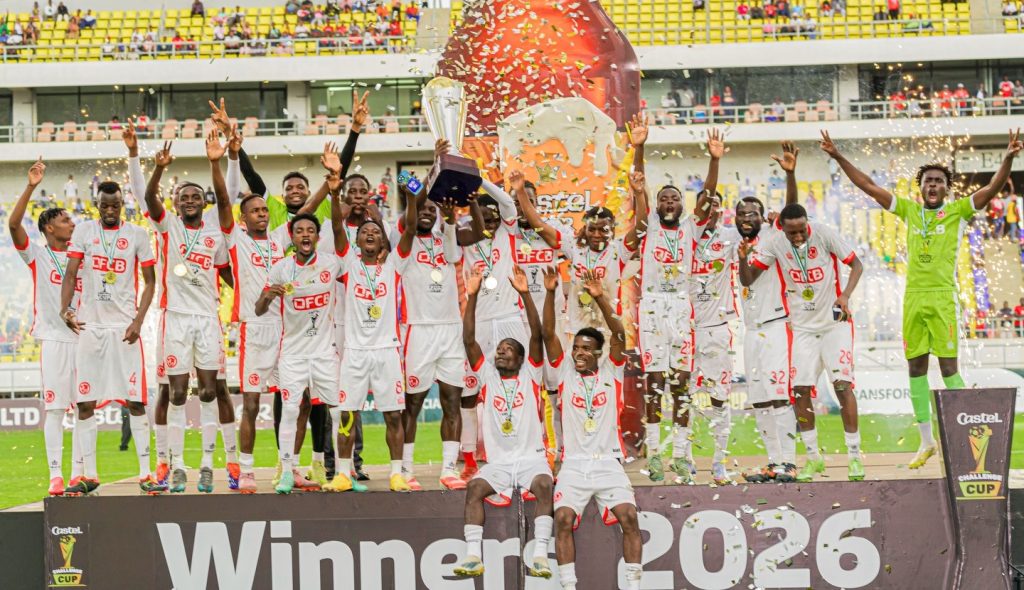
From ownership, reform and youth investment to a historic quadruple and continental ambition, Bullets’ 12-season reign has reshaped Malawian football on-and-off the pitch.
In those 12 seasons, top-flight league titles have been secured with authority while conquering cup competitions with consistency.
In 2023, Bullets completed what no domestic side had managed before, winning the league, the Airtel Top 8, the FDH Bank Cup and the inaugural Castel Challenge Cup.
When asked what has been the secret behind Malawi’s most popular team’s success, Bullets president Konrad Buckle mentioned the club’s commercialisation and professionalisation drive which started in 2017, as having played a major role.
He said: “The 2017 takeover by Nyasa Manufacturing Company marked a decisive turning point in Bullets’ modern history. It was more than a financial intervention. It was a structural reset that reshaped the club’s identity and direction.
“The club departed from its traditional supporters-led model and transitioned into a professionally managed entity structured as a Limited Company. In so doing, Bullets became the first football club in Malawi to fully commercialise its operations under a corporate governance framework.
“This evolution strengthened accountability, clarified ownership structures and introduced modern administrative systems. The Limited Company framework enabled structured contracts, financial discipline, corporate partnerships and long-term planning, foundations that would underpin the 19-trophy era that followed.”
Buckle led the process under NMC ownership, supported by Fleetwood Haiya, Escort Chinula, Dimitri and Demo Kalaitzis, among others, who were instrumental in stabilising the club’s governance architecture.
In subsequent years, Haiya and Chinula, who both served as chief executive officers during the reform phase, rose to national prominence.
Haiya was elected Super League of Malawi (Sulom) president in 2023 before ascending to the presidency of the Football Association of Malawi (FAM) later that year.
Chinula, who currently serves as Bullets’ vice-president, was elected as a board member of the Malawi National Council of Sports in 2025.
Jim Kalua, who was also part of the transition process as one of the trustees, now serves as Sports Council board chairperson.
Buckle said their rise to national leadership positions reflects the administrative depth cultivated during Bullets’ transformation.
Bullets’ ownership stability quickly translated into competitive resurgence.
The team’s sustained league success brought regular qualification for the CAF Champions League, positioning The People’s Team as Malawi’s most consistent representatives on the continental stage.
This also enabled the club to become a member of African Club Association (ACA).
But central to the 19-trophy era has been strategic investment in a vibrant youth development programme.
Buckle said they deliberately diverted significant resources into strengthening youth development structures.
Bullets have a four-tier fully integrated football ecosystem starting with first team, reserves, women’s and Under-19 teams.
The Under-19 structure is a grassroots pathway which feeds into the Reserves before progression to senior football.
The Women’s team has grown into a competitive force, securing two major titles while producing players for the Malawi National Women’s Football Team, the Scorchers. Several players have also earned opportunities abroad.
Out of the 19 major trophies won during this period, excluding Charity Shield titles, the Bullets Reserves have contributed to the success.
Many players who formed the backbone of the historic quadruple-winning squad progressed through this system and many of them are now international stars.
Charles Petro now plays in Europe with Romanian side FC Botoșani while Patrick Mwaungulu and Lanjesi Nkhoma moved to TP Mazembe in the Democratic Republic of Congo. Chimwemwe Idana is currently at Zanaco in Zambia after a stint with Silver Strikers.
The Reserves did not just serve Bullets alone. Domestically, Innocent Msowoya, Andrew Lameck, Happy Mphepo and Wongani Kaponya joined Ekhaya FC while MacDonald Lameck transferred to Silver Strikers.
Petro, Mwaungulu, Nkhoma and MacDonald Lameck have also become regular members of the Flames, reinforcing the reserve side’s impact on the country’s talent pipeline.
Buckle says beyond the pitch, Bullets’ institutional growth has extended far and wide.
“Bullets became the first domestic club to fully embrace structured commercialisation, pioneering large-scale replica jersey sales and reshaping supporter culture.
“The comprehensive technical sponsorship agreement with Admiral elevated presentation standards across all four teams while First Capital Bank, as platinum sponsors, have reinforced operational stability alongside a broader network of partners.
“Digital transformation further modernised the club. Verified platforms across Facebook, X, Instagram, TikTok, YouTube and WhatsApp Channel have made Bullets the most followed football club in Malawi, strengthening communication with supporters.”
“The scale of transformation is perhaps most visible in organisational growth. Bullets now employ more than 140 individuals across playing, technical and administrative roles, reflecting both financial investment and institutional maturity.”
Bullets supporters general secretary Archibald Kasakula said The People’s Team diehards are proud of NMC influence on the club.
He said: “In all fairness, Bullets has been a shining example of just how football ought to be run. Administratively, technically and operational wise, the club has demonstrated real football best practices all thanks to the NMC take over..”
From moving around with a begging bowl in stands to collect alms from supporters to financial stability which resulted in hauling 19 trophies in 12 seasons, Bullets set an example to other clubs that commercialisation and professionalisation for Malawian clubs is possible.