Malawi Housing Corporation (MHC), a once‑vibrant taxpayer‑funded entity, has recorded cumulative losses of K8.1 billion over the past four years and now carries liabilities nearly double its assets, a review of National Budget documents show.
Performance figures show MHC’s assets are valued at K4.9 billion while liabilities stand at K9.1 billion, a ratio of 0.5:1, up from 0.35:1 the previous year. The imbalance indicates the corporation is struggling to meet short‑term obligations as they fall due, with current liabilities including substantial arrears on statutory obligations.
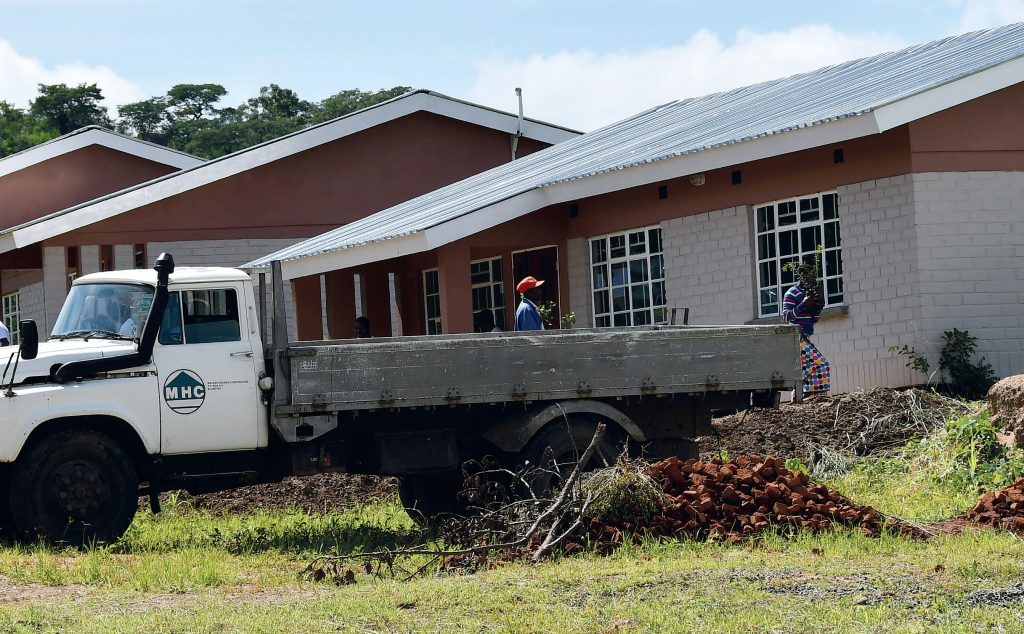
These arrears include taxes—Pay As You Earn, Withholding Tax and Value Added Tax—totalling K1.4 billion; deposits for plots and house rent amounting to K5.7 billion and K1.3 billion owed to creditors and other service providers.
By financial year, MHC posted a loss of K268 million in 2022/23, which surged to K4.6 billion in 2023/24, then fell to K2.1 billion in 2024/25. As of September 2025, midway through the current financial year, the corporation recorded an additional loss of K1.2 billion.
The 2026 Annual Economic Report, released with the National Budget documents, says MHC expects to improve its fiscal position through a project to construct 250 000 houses, maintain existing stock and regularize encroached areas. The report projects a modest profit of K230 million by the end of the current financial year.
“The upward turn was primarily caused by an increase in rentals by 23 percent at the beginning of the financial year and expected income from regularization of encroached plots and collection of proceeds from 765 plots,” the report states.
Consumers Association of Malawi executive director John Kapito on Wednesday said MHC should have been disbanded long ago for failing to modernise. He said the corporation was established under a different model—focused on developing land and building subsidized low‑cost housing—but has not adapted to current realities.
“MHC is one body that could have been disbanded a long time ago and instead create a body that would provide housing at commercial value in order to provide more houses at cost‑reflective rentals for growth and maintenance of their structures,” Kapito said.
He urged the government to dissolve MHC and establish a new housing agency responsible for providing land and housing at cost‑reflective rents and rates.
Kapito blamed MHC’s failure to reform on a structure dominated by politically appointed board members and staff who have not adjusted to shifts in land availability, accountability, and the need to invest and expand.
For nearly 53 years—from 1964 to 2017—MHC operated as a statutory corporation mandated to construct houses, develop plots and maintain existing properties.
An amendment to the MHC Act, gazetted in January 2017 and effective 1 September 2017, required the corporation to operate as a commercial entity and diversify its services to become profitable.
MHC’s official website says the corporation pursued new initiatives after diversifying, including selling housing solutions to the public for a fee, purchasing block‑making machines at Ngumbe in Blantyre and upgrading carpentry workshops in Blantyre and Mzuzu.
MHC spokesperson Ernestina Lunguzi said on Friday the corporation has leveraged its assets and human capital to offer consultancy services in architecture, surveying, maintenance, asset valuation, engineering and construction.
She added that MHC manufactures building blocks, sells carpentry and welding products, and hires out equipment and vehicles to generate revenue, alongside reviewing rents and fees to reflect market values.
However, Lunguzi said MHC has not yet constructed any of the 250 000 targeted houses because it has not secured serious financing partners.
“Project 250 is still at the inception stage where the corporation is still trying to identify serious financiers to partner with. Once serious partners are identified, the project will commence. The overall estimated cost is K14.9 trillion for 250 000 units in the next 10 years. The plan is to construct 25 000 units annually. The funds are currently not available,” she said.
Lunguzi said among the challenges MHC continues to face, include low housing stock relative to the huge housing demand, high borrowing costs which hinder the corporation’s ability to secure construction loans due to high interest rates and high utility costs and delayed provision.
“The high costs of water and electricity impact project expenses, and the corporation is subject to the utilities providers’ service timelines,” she further said.
Lunguzi listed other challenges facing MHC: low housing stock relative to demand, high borrowing costs that hinder access to construction loans, high utility costs and delays in service provision, encroachment on MHC land that depletes land and disrupts planned activities, and reliance on traditional construction methods that slow delivery. She said the corporation is seeking partners to identify faster and more durable construction alternatives.
Minister of Lands, Housing and Urban Development Chimwemwe Chipungu did not respond to our request for comment.
In recent years MHC has faced allegations of selling houses below market value to insiders and politicians. In 2011, it was reported that MHC allegedly lost K105 million after selling 22 houses below market value.
The Anti‑Corruption Bureau probed and arrested some former executives and politicians, who were later cleared.