The country’s anti-graft fight is under serious threat as the Anti-Corruption Bureau (ACB) is facing erratic funding which has led to several high-profile cases stalling at the investigation stage.
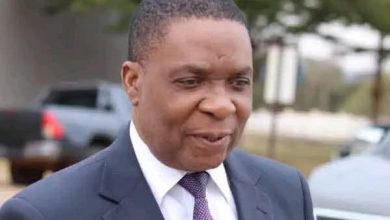
ACB acting director general Gabriel Chembezi said funding gaps have crippled the institution, noting that in March the investigations sector received only K4 million to be shared among all its offices nationwide, an amount that could not even facilitate a single full investigation.

In an interview, Chembezi said investigators and prosecutors have been adversely affected by the situation, especially when handling several complex cases that require extensive investigations.
“We are talking of investigating cases throughout the country. We have offices in Mzuzu, Karonga, Lilongwe, Mchinji, Blantyre and Zomba. That K4 million has to be shared in all those offices for investigations. And these are complex cases.
“They require travelling, they require allowances, fuel and we have to move gadgets to Blantyre for forensic examination and so on. So, it’s really tough to do our mandate properly with these levels of funding. And I can tell you that most cases are stalled at the investigation stage because of lack of funding,” he said.
For the 2026/2027 fiscal year, it has emerged that while the graft-busting body has had its budgetary allocation increased on paper, it still expects a financially challenging year with the institution facing a deficit of about 28 percent as K17 billion was proposed but only K12 billion has been allocated.
Chembezi said the institution plans to prosecute high-profile cases and forfeit assets worth K2 billion, most of them overseas.
He, however, said with the limited budget, the bureau may have to forego some of these plans and instead work within the available resources.
He said that despite the limited budget last year, the ACB managed to forfeit assets worth K600 million conclude over 30 investigations.
Nonetheless, 56 percent of the national budget was spent on operations, while the bureau’s core mandate received only 46 percent, a disparity that explains the resource gap facing the institution.
Chembezi said the limited resources have also affected the formulation of key guiding documents, including the National Anti-Corruption Strategy and the ACB Strategic Plan, both of which have expired, thereby affecting the bureau’s operations.
“In the absence of the two, we are finding it difficult to work properly in the absence of guiding instruments. We are working to have the strategic plan for 2026 to 2030, as well as the national and corruption strategy III. “Processes are at an advanced stage. We are also working towards having the strategic plan this year, so that it should run from this year to 2030. But in the absence of that, I have temporarily drafted my own strategy on how to run the Bureau. As we are waiting for these strategic documents, there are some key priority areas, key priority strategic areas, that are guiding me in running the bureau in the absence of these strategic documents,” added Chembezi.
Catholic Commission for Justice and Peace (CCJP) national coordinator Lewis Msiyadungu said the ACB’s situation poses a threat to the fight against corruption.
“This is the situation considering that ACB is critical in investigating and fighting corruption. If development is failing to progress in this country, it is because most of the resources allocated for such end up in people’s pockets through corruption. If we are serious about fighting corruption, lets adequately fund ACB in all angles,” said Msiyadungu.
National Anti-Corruption Alliance chairperson Michael Kaiyatsa said the situation that ACB is going through is worrisome.
“This situation also raises questions about government’s commitment to fighting corruption.
The President has repeatedly said he wants zero corruption. But if the institution responsible for fighting corruption is not being properly funded, it means the leadership is only giving lip service to the fight against corruption, which is quite sad.
The reported 28 percent cut from the ACB’s proposed budget is extremely worrying. Such a reduction will likely weaken the Bureau’s ability to carry out investigations, prevent corruption, and educate the public.
In the long run, underfunding the ACB only benefits those involved in corrupt activities. Adequate funding for the ACB should not be seen as a luxury, but as a necessary investment in accountability and good governance” said Kaiyatsa.
Parliament’s Legal Affairs Committee chairperson Gilbert Khonyongwa said the funding shortfalls facing the ACB are worrying, adding that the committee will take up the matter and push for more resources through the Treasury.
Khonyongwa said the situation threatens the institution’s mandate to fight corruption hence the need for intervention.
“We have noted that with the current economic situation, ACB cannot get what they ordinarily want to. We will assist in lobbying with relevant authorities so that they should reconsider adjusting the figures upwards,” said Khonyongwa.
Ministry of Finance spokesperson Williams Banda said the funding concerns raised will be addressed in the winding statement by Minister of Finance Joseph Mwanamvekha.
ACB has been operating without a permanent director general following the expiry of Martha Chizuma’s contract in June 2024.
Meanwhile, the process of appointing the permanent DG is underway with over 50 people applying for the post and shortlisting is underway.
In January last year, the Office of the Ombudsman ordered the Ministry of Justice and Constitutional Affairs to restart the process of recruiting the DG and disqualified Hillary Chilomba and Oscar Taulo from the race for falling short of legal requirements.