The Parliament of Malawi has seen many things including heated arguments and walkouts dramatic enough for theatre.
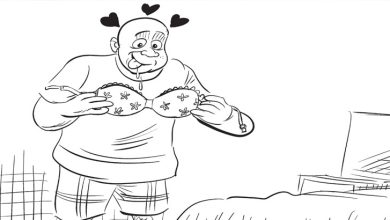
However, few moments have stirred curiosity like the recent discovery of a chithumwa, a perceived lucky charm, quietly sitting on the floor of the house where lawmakers bang heads and shape the future of the country.
Whether it slipped unnoticed or was abandoned may never be known. But what is certain is that the small object triggered a national conversation in minibuses, offices and on social media.
Malawians at home, on the move and hooked to online chat groups asked: “As we march toward MW2063, are we guided by spreadsheets or spirits?”
The pillow-like charm told a disconcerting story of the people entrusted with the national vision to transform Malawi into an inclusive, self-reliant, industrialised upper middle-income economy by 2063—the centenary of self-rule.
The scandal announced by Speaker of Parliament Sameer Suleman landed between comedy and concern.
Beneath the uproarious laughter sat a reflection on how a nation trying to industrialise negotiates deeply rooted beliefs about power, protection and success.
Malawi 2063, the country’s long-term national development blueprint, hinges on well-documented pillars: Increased productivity, innovation and mindset change.
It envisions smart cities replacing informal settlements, commercial farms feeding industries and young entrepreneurs driving economic growth powered by technology, planning and confidence in institutions.
A charm in Parliament thus feels symbolic because Parliament represents rational order, where national problems are solved through debate, data and evidence.
Outside the chamber, reactions were mixed but lively.
“At first I laughed. Then I thought maybe our leaders are also scared. Politics is tough,” said Break Kachala, who sells secondhand clothes in Blantyre.
National Advocacy Platform chairperson Benedicto Kondowe believes the symbolism is serious and concerning as “it sends a powerful, unsettling message about misplaced priorities”.
“Parliament represents the Constitution, debate and evidence-based decision-making. The presence of a charm suggests fear and superstition influence leadership. That perception can erode public confidence,” he says.
Political analyst Dr George Chaima is sharper: “Those who mix politics with superstition show fear and weakness. They lack confidence and believe in little gods to succeed. They have little to contribute and are not fit to be lawmakers.”
For younger Malawians raised on smartphones, the contrast is sharp.
Malawi University of Science and Technology student Franklyn Mapira finds it laughable but paradoxical.
“We are learning coding, robotics, AI. Then you hear about charms in Parliament. It feels like Malawi is running two operating systems at once,” says the teenager.
Still, others caution against a cultural indictment. Traditional beliefs provide moral frameworks and social cohesion. The challenge, they argue, is balance, not erasure.
“Malawians pray before meetings, pastors bless buildings, some carry charms. The real issue is performance. Are legislators delivering development?” reasoned a Lilongwe-based senior citizen privately.
From the banks of Lisungwi River in Neno District and South Rukuru at the bottom of Chipokabawoli in Rumphi, famous politicians’ posh vehicles have been spotted in shrines of witchdoctors as they chase after fame, wealth and power.
The belief in magical charms is not uncommon in a country where a youthful population brutally kills the elderly suspected of witchcraft.
The discovery of a magic charm in Parliament—the house of order and records—brings into question the quest for Malawi 2063, whose success will be measured by tangible outcomes: reliable electricity, productive industries, quality education and jobs for young people.
Former vice-president Saulos Chaima, who died in a military plane crash on June 10 2024, popularised mindset change as a central pillar of the national vision, saying: “Malawi 2063 cannot succeed without confronting such attitudes”.
“The vision cannot bear fruit if lawmakers are busy with superstition instead of planning projects. Unless they wake from useless beliefs, the country will struggle,” he said rather prophetically.

Kondowe agrees that transformation requires deliberate societal shifts.
“Mindset change requires investment in civic education, critical thinking and science from primary school to public service. Leaders must model integrity. Harmful narratives must be challenged through education, media and dialogue,” he stressed.
Social and behaviour change a n d d e v e l o p m e n t communication expert Michael Nazombe, from the Malawi University of Business and Applied Sciences, says culture intersects with development.
“Culture defines meaning and social forces for unity and collaboration. Societies need culture to attain sustainable change. Development strategies are stronger when they work with cultural structures,” he says.
Nazombe, however, notes that not every belief contributes positively:
“The presence of charms reveals deep-rooted beliefs about success. If they cause conflicts and slow development, we need interventions. Positive values promote cooperation and teamwork. Negative beliefs harm communities and must be changed,” he warns.
The chithumwa found on the floor parliamentarian are forbidden to cross shows how quickly superstition captured public imagination.
Chaima is blunt: “We should not waste time preserving cultural practices lacking relevance. Charms are useless inside as well outside Parliament because they cannot create wealth or grow the economy.”
But Kondowe argues that balance is possible without rejecting heritage.
“Cultural identity should be respected in private life. Public institutions must operate on law and evidence. Leadership must be professional, transparent and rational,” he explained.
The news of the chequered charm came to light when Suleman told the House that whoever brought it should immediately retrieve it.
The Speaker issued a stern warning to members of Parliament that such objects have no place in the house and will not be tolerated under any circumstances as some lawmakers are God-fearing.
He has yet to tell the House if the owner of the unforeseen object has reclaimed it.
The country laws do not recognise witchcraft, but criminalises calling each other a witch or wizard