‘We sleep on empty stomachs’: The refugees abandoned by the global aid freeze

In the drastically overcrowded Dzaleka Refugee Camp, food rations have been cut to zero. As Malawi swings from severe drought to catastrophic flooding, the humanitarian safety net is buckling under the strain, writes our contributor JACK MCBRAMS.
In Dzaleka Refugee Camp, the queues have not disappeared. Hunger has not disappeared. Only the money has.

Last month, refugees gathered for what many believed would be another routine World Food Programme (WFP) distribution at the sprawling settlement in central Malawi, about 40 kilometres north of Lilongwe.
Instead, according to several residents, officials delivered a grim message: there will be no more funding beyond August.
For thousands of refugees already surviving on sharply reduced humanitarian support, the announcement confirmed what many had feared for months, that one of southern Africa’s longest-running refugee situations is quietly sliding into a deeper humanitarian crisis at precisely the moment global aid systems are retreating.
“They gave up the three-month allowances lasting up to August but we were also told this would be the last distribution,” says Marriam Habimana, a 30-year-old Burundian refugee and single mother of three who has lived in Dzaleka since she was three. “Now we do not know how we will survive.”
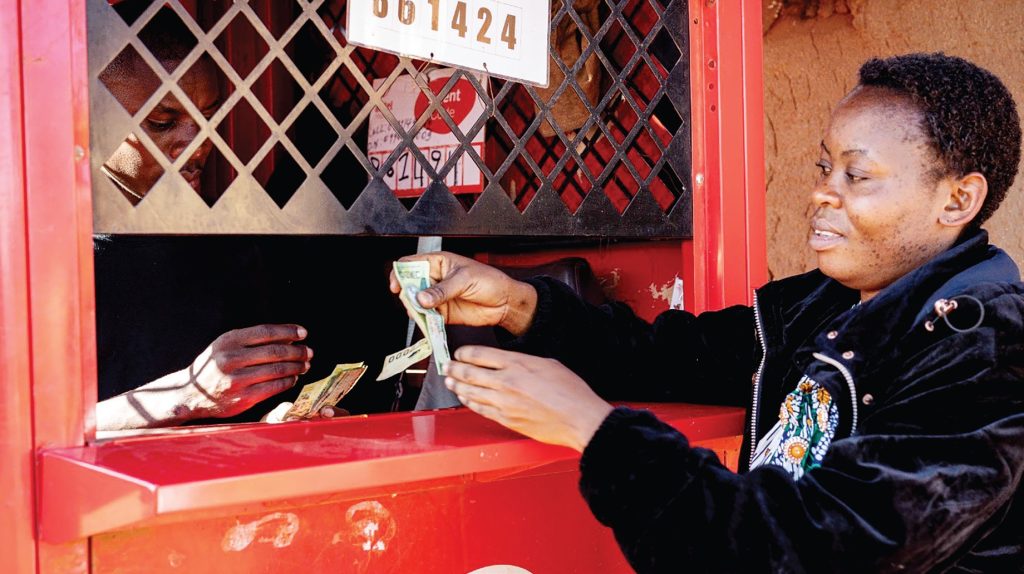
For years, Habimana relied on monthly WFP cash transfers to feed her children. But the assistance has steadily collapsed: from around K75 000 a month to K20 688, before falling effectively to nothing.
Inside Dzaleka, a camp originally designed for 10 000 to 12 000 people but now hosting more than 57 000 refugees and asylum-seekers, the consequences are becoming visible everywhere: overcrowded classrooms, informal schools, rising insecurity, collapsing protection systems and families surviving on one meal a day.
The crisis unfolding here is not simply about shrinking food rations. It is about the gradual hollowing out of an entire humanitarian ecosystem.
Established in 1994 by the Malawi government and United Nations High Commissioner for Refugees (UNHCR), Dzaleka has evolved from a temporary refugee settlement into a semi-permanent city of displacement.
Most residents come from the Democratic Republic of the Congo, Burundi and Rwanda. Women and children make up the majority of the population.
Many arrived fleeing war or political violence. Increasingly, they are finding themselves trapped in a second crisis: global donor fatigue.
Musago Mirida, another Burundian refugee and mother of three, remembers a very different life before fleeing Burundi in 2014.
Her husband fished on Lake Tanganyika while she cultivated rice, sweet potatoes and plantains. “We
had cows for meat and milk,” she says. “When there was a wedding, we ate rice, fish and meat together.”
Now, she survives by working in other people’s fields around the camp.
One of her sons has stopped attending school to help support the family.
“We cannot afford proper meals,” she says quietly. “We just eat simple things we can manage.”
But even those coping mechanisms are beginning to fray.
According to refugee rights organisation INUA Advocacy chief executive Innocent Magambi, the reduction of WFP cash assistance alone does not fully explain the scale of the crisis.
“Refugees have gradually developed coping mechanisms,” he says. “Families have reduced consumption, shared resources and created informal support networks. People have learned, in many cases, to survive with less.”
But the more serious problem, he argues, is the wider scaling down of humanitarian operations inside the camp.
“The deeper crisis is the near shutdown and severe reduction of broader humanitarian support systems,” forcing refugees to establish informal community schools. Many operate without adequate classrooms, qualified teachers or recognised certification.
Magambi says. “Education, health, protection systems and social services have all been affected.”
The result is a dangerous erosion of what he describes as the “fragile balance” refugee families had managed to establish after years of uncertainty. Education is among the sectors under greatest strain.
Demand for school places now vastly exceeds available infrastructure, Most teachers are themselves refugees whose professional qualifications are not formally recognised in Malawi.
“Employing Malawian teachers requires salaries refugee communities simply cannot sustain,” says Magambi. Health services are under similar pressure.
Refugees face the same medicine shortages affecting Malawi’s overstretched public healthcare system, but many also report being forced to make informal payments for services that should technically be free.
“That substantially increases household costs,” Magambi says.
For newer arrivals, survival is even more precarious.
Faize Boliti Baikendje fled the conflict in eastern Democratic Republic of the Congo after her daughter was abducted and tortured by men who accused her family of links to rebel groups.
Her journey to Malawi took months.
She walked from North Kivu to South Kivu, exchanged personal belongings to pay for transport, crossed
into Tanzania by boat and eventually reached Malawi through Karonga, where she spent 18 months in a transit centre before arriving in Dzaleka.
“We came with one small sack of clothes,” she says.
Today, she survives through small scale trading, hairdressing and makeup work, though customers are limited.
“The money mostly buys food,” she says. “Sometimes we eat once and sleep hungry.”
Her eldest son, Gilbert, recently excelled in an English-language class.
She dreams of reopening the pharmacy she once operated in Goma.
“If I had capital, I could start again,” she says. “But I cannot save anything.”
The pressures inside Dzaleka are unfolding against a wider national emergency.
Malawi has endured successive climate shocks over recent years: Cyclone Idai, Storm Ana, Cyclone Freddy, El Niño-induced drought.
Heavy rains in March affected more than 368 000 people across 23 districts, according to Malawi’s Department of Disaster Management Affairs (DoDMA). More than 34 000 hectares of cropland were destroyed.
At the same time, humanitarian agencies are grappling with enormous funding gaps.
Malawi’s 2026 National Flood Response Plan requires nearly K49 billion ($28 million), but authorities say only a fraction of that amount has been secured.
The World Food Programme says about four million Malawians were projected to face acute food insecurity during the 2025-26 lean season. Yet funding shortfalls meant the agency could support only about one million people, half its original target.
“WFP has the operational capacity to reach more vulnerable people,” WFP Malawi country representative Hyoung-Joon Lim said.
“But funding shortfalls hold us back.”
Resilience programmes such as school feeding and climate-smart agriculture are among the hardest hit.
For Magambi, the situation in Dzaleka reflects a larger global shift.
“Wealthier countries are increasingly turning inward,” he says. “Security concerns, domestic pressures and competing global crises mean protracted refugee situations like Dzaleka are no longer attracting historic levels of support.”
That reality, he argues, requires a fundamental rethink of refugee policy in Malawi.
He says the government must urgently engage refugee communities directly, reform restrictive refugee laws and allow greater economic participation to reduce long-term dependency on aid.
“It should not be seen as abandonment,” he says. “But it must be recognised as a signal that the old humanitarian model is collapsing.”
Back inside Dzaleka, however, those debates feel distant. For families watching assistance disappear month by month, the crisis is already here.
“We are surviving,” says Habimana. Then she pauses. “But surviving is becoming harder every day.”
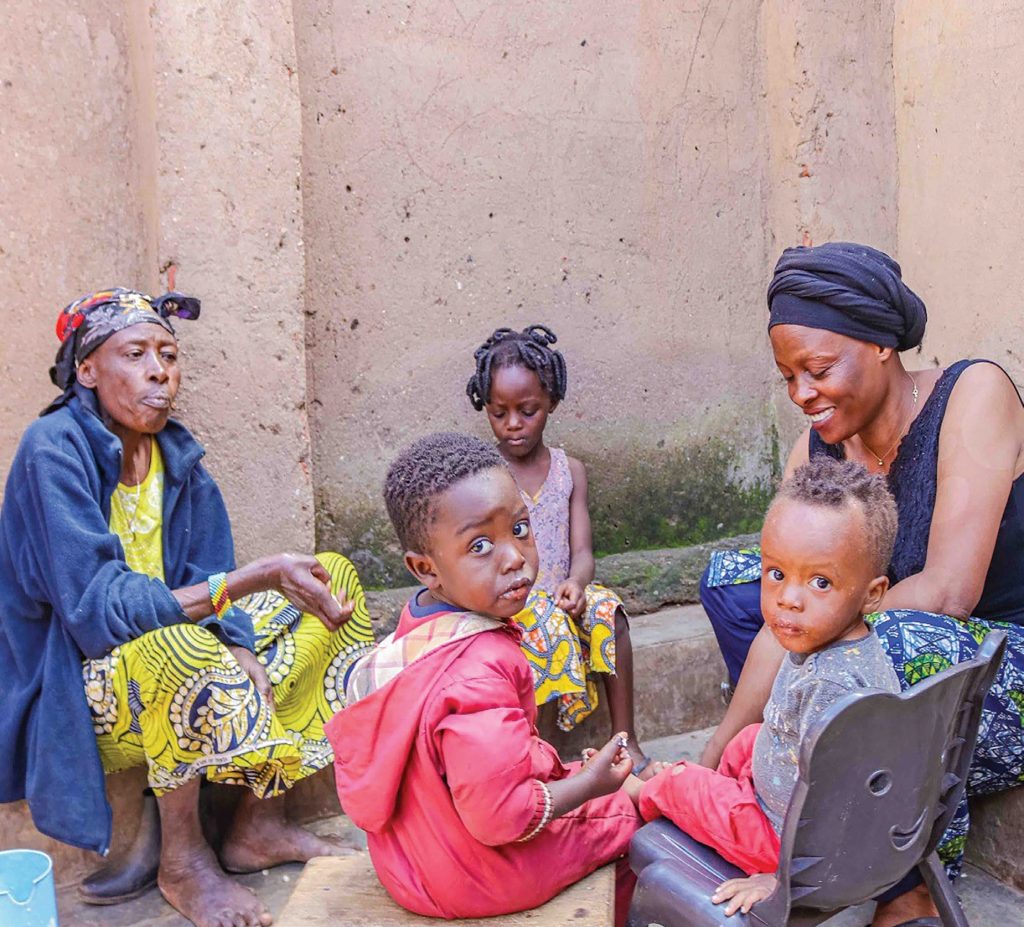
Baikendje and her children eat bananas outside their home in Dzaleka