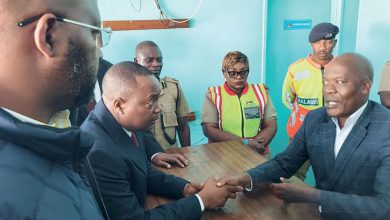
The Anti-Corruption Bureau (ACB) says institutions of higher learning have a role to play in the fight against corruption as they are responsible for developing the country’s human capital.
ACB principal corruption prevention officer Sam Kambani made the remarks on Friday during the closing of a five-day reorientation for Malawi University of Business and Applied Sciences (Mubas) Institutional Integrity Committee members in Blantyre.

He said universities and other higher education institutions must uphold strong ethical standards to produce graduates who value integrity which is crucial in addressing corruption particularly in the public sector.
Said Kambani: “Educational institutions are among the key pillars of the national anti-corruption strategy. As institutions mandated to train students, they have a responsibility to teach them about the dangers of corruption, as these students are the country’s future leaders.”
He said as a public university, Mubas receives government funding for the procurement of goods and services, making it important for members of the institutional integrity committee to have the necessary skills to identify, prevent and address corruption risks.
“No public institution is immune to corruption, so it is important that all institutions join hands in the fight against it,” added Kambani.
Mubas Institutional Integrity Committee chairperson Christabel Kambala said the committee has been conducting anti-corruption awareness campaigns among staff and students since its establishment to promote a corruption-free environment at the university.
“As a committee, we will support the university’s efforts to combat all forms of corruption through sensitisation programmes and by reviewing reports of alleged corrupt practices,” she said.
Kambala added that Mubas provides anti-corruption awareness training to all first-year students to promote responsible citizenship among the student population.
The reorientation was organised following changes in the committee’s membership after some members left the institution or went abroad for further studies.