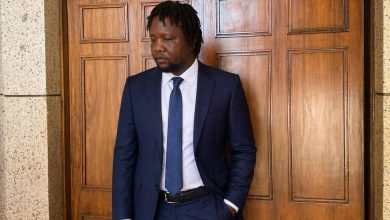
I came across a publication by Dr. Paliani Chinguwo titled The Mwanza War of October 1967: Cold War Shadows in Malawi. The publication is a valuable contribution to Malawi’s history, shedding light on an important chapter that has remained hidden for decades.
This publication reminds us that Malawi’s history is far richer and more complex than many of us have been taught. It is also a reminder that history is not simply about the past. It shapes a nation’s identity, values, and future. When a country neglects its history, it risks repeating past mistakes and depriving future generations of lessons.
In Malawi, many key events remain poorly undocumented, including the Mwanza War of October 1967. For years, little has been done to openly document sensitive moments such as the 1964 Cabinet Crisis and the armed struggle that followed. As a result, many young Malawians remain unaware of these important parts of our national story.
For sure, history should never be written to please anyone. But should be written honestly, fairly, and based on evidence. Every nation deserves an honest account of both its achievements and its failures. Only then could a nation advance forward.
One of the central figures in this forgotten chapter is Yatuta Chisiza, one of Malawi’s early nationalists and a patriot member of the first post-independence government. He served as Minister of Home Affairs under Dr. Hastings Kamuzu Banda. However, following the Cabinet Crisis of September 1964, Yatuta, together with several senior ministers, fell out with Kamuzu over growing concerns about governance, concentration of power, foreign policy, and the direction the young nation was taking.
The Cabinet Crisis involved respected leaders such as Henry Chipembere, Kanyama Chiume, Orton Chirwa, Augustine Bwanausi, Willie Chokani, Rose Chibambo and others. They questioned what they believed was increasing authoritarian rule and disagreed with several government policies. The disagreement eventually led to their dismissal and resignation, forcing many of them into exile.
For Yatuta Chisiza, exile did not end his political struggle. Believing that peaceful efforts to restore democracy had failed, he chose armed resistance. In October 1967, he led a group of just 17 fighters into Malawi through Mwanza to challenge Dr Banda’s government. Among those who joined him were Lutengano Mwahimba, George Kanyanya, Frank Jiya, and other committed exiles.
The mission ended in tragedy, with several fighters, including Yatuta and Lutengano Mwahimba, losing their lives. Others, such as George Kanyanya and Frank Jiya, survived and later played important roles in the first multiparty administration under Bakili Muluzi, the only President who officially recognised returnees. However, despite their sacrifices and important contributions, their stories remain largely missing from Malawi’s official history.
This book by Dr. Chinguwo goes beyond recounting the Mwanza War by placing it within the broader context of the Cold War and Southern Africa’s liberation struggles. It shows that Yatuta Chisiza and his colleagues were part of a wider movement for political change, supported by regional liberation movements and countries opposed to colonialism. This challenges the view that the Mwanza War was merely a small domestic rebellion.
Among all these stories, Yatuta Chisiza remains one of Malawi’s forgotten heroes among those many. Whether one agrees with his decision to take up arms or not, there is no doubt that he was fighting for the future for his country. Sadly, nearly six decades later, the exact location of his grave remains unknown. It is a painful reminder that some of Malawi’s important historical figures have never received the dignity and recognition they deserve. One could only pray and hope that one day his final resting place will be located.
In tribute to Yatuta, Professor David Rubadiri in his poem “Yatuta Chisiza”, wrote “great men may die, but the ideals they stood for endure”. The poem calls on us to remember their sacrifice, honour their courage, and preserve their place in our nation’s history.
May their sacrifice never be forgotten!