
Lindian Resources Limited has secured $100 million (K120.8 billion) to fund the Kangankunde Rare Earths Project in Balaka, strengthening the country’s position as an emerging major player in the global rare earths market.
The financing plan, through the sale of 133.33 million shares to Australian and offshore investors at $0.75 (K906.45) per share, allows for debt-free development of the project, with stage one costs fully covered and future expansion to be funded from project cash flows.
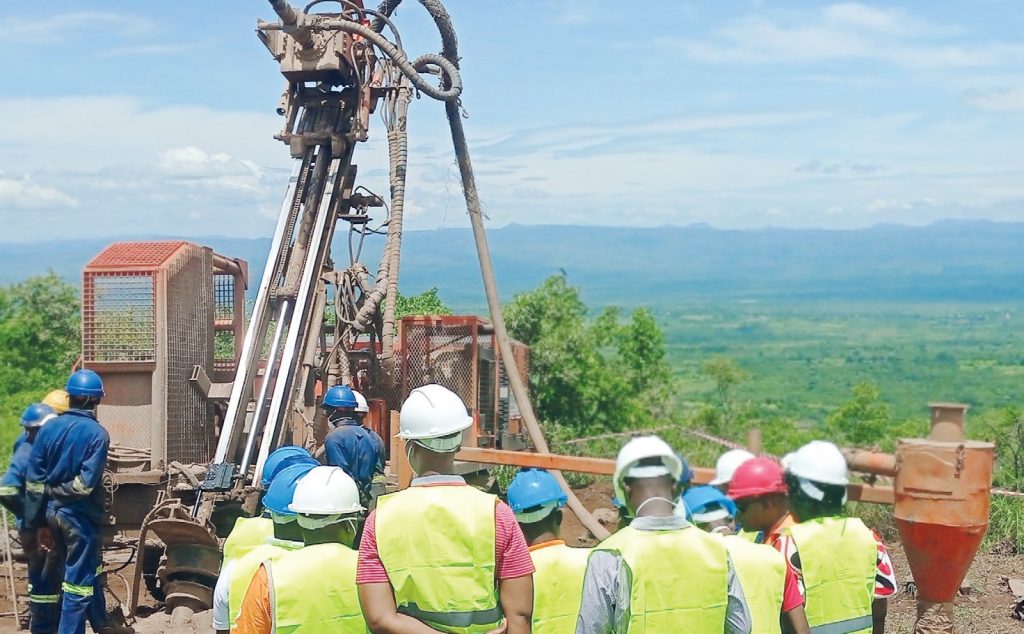
In an update, the Australian Securities Exchange-listed miner described the financing arrangement as significant, as it ensures stage one funding through to first production, as well as partial funding of stage two activities without incurring debt.
Part of the update reads: “The funds will finance completion of stage one of the Kangankunde Rare Earths Project to reach first concentrate production and cash flow, stage two expansion, and the Mixed Rare Earth Carbonate (Mrec) facility.”
L i n d i an R e s o u r c e s chairperson Robert Martin said the strong response from institutional investors reflects the company’s growing global profile and the project’s strategic importance as one of the next rare earth producers to supply emerging global supply chains.
“Importantly, stage one at Kangankunde and our Mrec facility are both fully-funded without the need for any debt drawdowns to reach first cash flows, allowing us to be in production at both operations debt-free and with a clean balance sheet.
“This capital also allows Lindian to accelerate stage two, bring forward key development activities and materially reduce execution risk, while advancing our downstream strategy through the Mrec facility Martin said.
Meanwhile, the firm’s executive director Zac Komur assured stakeholders in an investor presentation that phase one production will start in the fourth-quarter of this year.
He outlined the off-take deals already secured, projected mine revenues and market developments, including the surging global demand for rare earths, which is expected to drive growth.
Komur added that with the project expected to produce its first concentrate between October and November this year, and with second-phase construction starting by the end of 2026 and production ready by 2028, the Kangankunde project will become one of the world’s critical rare earth producers.
The optimism also follows the strategic partnership entered Shipping activity remains disrupted. Only a handful of vessels have passed through the strait since the ceasefire announcement, far below the usual daily average of around 130. Clearing the backlog could take at least 10 days, even if normal operations resume.
Maritime analysts warn that even under the best-case scenario, it could take weeks to move stranded cargo and months for global trade to return to pre-crisis levels.–Bbc
into with Iluka Resources of Australia for $20 million (about K35 billion) in stage one funding, alongside a binding off-take agreement, which prompted the company to make a final investment decision.
Chamber of Mines and Energy national coordinator Grain Malunga said in an interview yesterday that the firm’s progress is in line with projections.
“The project has proven successful over the past decade, and having reached advanced stages of funding solutions and development, it is encouraging that it will soon start generating foreign exchange for the country,” he said.
Malawi’s entry into rare earth production will help diversify the global supply chain, reducing dependence on China and strengthening Africa’s mineral sector as the United States and Europe seek alternative sources of these essential minerals.
The Kangankunde project, known for its high-grade deposits of dysprosium and terbium, is poised to supply critical minerals used in the production of electric vehicle magnets and renewable energy technologies.
When operational, the Kangankunde Mine is projected to generate $114 million (about K200 billion) per year over a 40-year period, according to a feasibility study report released by the company this year. Output is expected to increase from 15 000 metric tonnes (MT) to 50 000 MT annually.
From the operations, the Malawi Government is expected to earn $5.56 million (about K9.7 billion) in royalties, in addition to income tax and other revenues from rare earth minerals.