What started as a dream to earn big and live a promising life crumbled for James Banda, from Manja Township in Blantyre, when he got hooked to gambling.
The game of luck nearly cost him everything.
The 32-year-old father of two worked as a teacher, earning a modest income that sustained his family.
However, beneath his lifestyle brewed a betting obsession that threatened everything he held dear.
Banda’s introduction to gambling was seemingly harmless, a friendly wager on a televised football match with colleagues.
A small win ignited a spark, leading him to explore local betting shops and eventually online platforms.
“The allure of quick money proved irresistible, especially as financial pressures mounted,” he says. “Gambling wrecked my life both at home and at work.”
Malawi’s gambling industry has experienced exponential growth in the past decade, with revenues spiking from K2.8 billion in 2015 to approximately K121 billion two years ago.
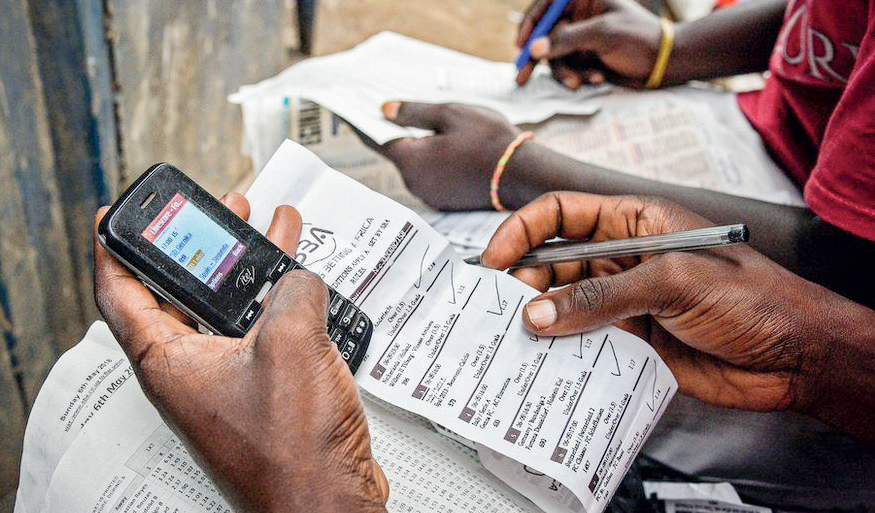
Currently, Malawi is a market for 12 licensed betting firms—with six involved in sports betting, four casinos and two wide area networks.
As Banda placed bigger bets, his losses multiplied—eating into his meagre income. Just like that, what began as harmless entertainment spiralled into a desperate chase to recover lost money and self-destruction, including degenerating debts.
“I hoped to make more money to support my family. Betting felt like an easy way out of poverty, but the more I put in, the more I lost,” he says.
Soon, Banda began diverting household funds, borrowing from friends, and liquidating assets.
The financial strain was severe, but the psychological toll was worse.
His friends recall that he became irritable, withdrawn and obsessed with gambling.
“His relationships deteriorated and his job performance declined,” says one.
And Banda concurs: “I was mostly depressed after losing a bet.
“I would take out my anger on my wife or students.”
Experts say gambling addiction stems from a mix of biological, psychological and environmental factors.
Online research shows that the habit triggers the brain’s reward system, releasing dopamine and producing a euphoric high similar to drug use.
Environmentally, exposure through family or peers can normalise the habit.
In Malawi, mobile phones betting platforms have made gambling more accessible, especially to the youth.
Psychological stress and escapism deepen the grip of addiction.
Banda’s descent hit rock bottom one evening when, overwhelmed by debt and despair, he contemplated ending his life.
“The weight of my actions and their impact on the family became unbearable,” he says.
Thankfully, a timely intervention by a close friend saved him from suicide.
“We found him hanging from a tree near his sugarcane garden. Luckily, we got there just in time and rushed him to the hospital,” said Fred Mbenje, a long-time friend.
Recovery has been long and painful.
Banda enrolledfor counselling, joined a local support group called Tingathe, and adopted strict financial controls.
“My wife now manages all our household finances. That has kept me from falling back into my old habits,” he says.
Through therapy, Banda confronted the root causes of his addiction and developed healthy coping strategies.
His story underscores the urgent need for awareness, prevention and recovery resources in Malawi.
The country now faces a growing gambling crisis. Studies point to a rise in betting and sports-related activity since 2019.
Youth are particularly vulnerable, often citing financial hardship and addiction.
Junious Sichali, a social scientist working with Malawi Epidemiology and Intervention Research Unit (Meiru), attributes the rising allure of betting to widespread poverty, unemployment and gambling outlets.
“There’s a gambling shop on nearly every corner. That easy access draws people in,” he says.
A study by Meiru has revealed how harmful gambling has led to financial loss and lives.
“Alarmingly, we have captured how some gamblers face concerning mental health challenges, which in some instances have led to suicide,” says senior researcher Chris Bunn.
Banda’s story is a poignant reminder of the human cost behind the numbers. It demands a coordinated response, stricter regulation, widespread education and accessible treatment, to curb the rise in gambling addiction.
While the Gaming and Lotteries Act (2022) and newly drafted regulations propose measures like location limits for gambling premises and penalties of up to K10 million or imprisonment for providing betting services to minors, enforcement remains weak.
The disastrous impacts have compelled the Malawi Gaming and Lotteries Authority to partner with St John of God Hospitaller Services to provide tips on responsible gaming and psychotherapy for mental health conditions resulting from the game.
Tabitha Dzoole, coordinator for addiction recovery services at the mental hospital, says gambling addiction is big, but only a few people report to the hospital for support.
“Others do not turn up because either they are not aware of the available support or they do not have money to do so,” she says.
As Banda rebuilds his life, he hopes his story becomes a beacon for others caught in similar storms.