Malawi Government has cleared K205.4 billion fuel importer under-recoveries and K103.29 billion statutory levies arrears in 12 months following restoration of the automatic pricing mechanism (APM), it has emerged.
The fiscal clean-up, according to Office of the President and Cabinet (OPC) data, reverses the 2023 to 2025 president Lazarus Chakwera administration’s policy that kept pump prices below landing costs, a development that made importers incur losses and led to the depletion of the Price Stabilisation Fund (PSF).
In the circumstances, importers resorted to withholding and utilising other statutory levies, including the road maintenance one, to keep afloat.
The OPC data show that accumulated importer under-recoveries have dropped from K949.2 billion to K743.8 billion, representing a 21.6 percent cut.
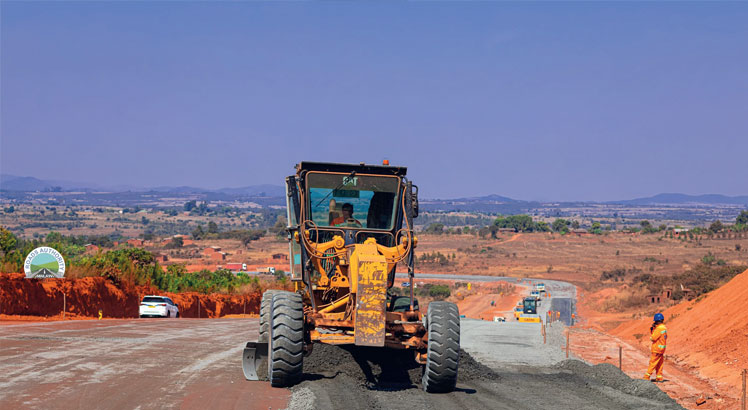
between Jenda and Mzimba
Turn-off. | Roads Authority
On the other hand, historical levy arrears fell from K504.37 billion in December 2025 to K401.08 billion in August 2026, a 20.5 percent recovery.
“The government restored consistent application of the Automatic Pricing Mechanism after its earlier suspension contributed to substantial importer under-recoveries, statutory levy arrears and fuel shortages,” says OPC in response to The Nation.
Fuel importer under-recoveries are the losses that fuel-importing companies or government fuel agencies incur when the regulated selling price of fuel is lower than the actual cost of importing and supplying that fuel while statutory levy arrears refer to levies that are legally required to be paid, but were not.
The restoration has eased pressure on the National Oil Company of Malawi (Nocma) and Petroleum Importers Limited (PIL) who were forced to pool all cash to buy the next shipment and default on statutory remittances.
The Roads Fund Administration (RFA), which gets over 85 percent of its income from the road maintenance levy could not pay contractors, halting road maintenance nationwide in the process.
The Malawi Rural Electrification Programme (Marep), which draws 90 percent of its capital from the rural electrification levy in the fuel pump price build-up, suspended Marep 9 implementation midway, leaving trading centres, clinics and schools off-grid.
The Malawi Bureau of Standards also struggled to service specialised testing equipment.
However, the improved remittances by the Malawi Energy Regulatory Authority (Mera) are now restoring lifelines to those institutions.
On the security of supplies, OPC said government has engaged a contractor for a 10-million-litre Mzuzu fuel storage facility, with construction to start imminently while similar expansion projects for Lilongwe and Blantyre are at contractor procurement stage.
“These structural developments will increase national fuel-storage capacity and strengthen the long-term security of fuel supply,” OPC said.
In an interview, Scotland-based Malawian economist Velli Nyirongo said the shift signals financial discipline, but warned that the debt mountain remains.
“The reduction in accumulated under-recoveries from K949.2 billion to K743.8 billion is positive progress. Similarly, the fall in historical levy arrears from K504.37 billion to K401.08 billion shows that money is being recovered and remitted. However, both backlogs remain substantial,” he said.
Nyirongo said consistent application of APM is critical because it allows prices to reflect international costs and exchange-rate pressures.
But he urged government to go beyond clearing arrears by improving transparency in fuel-price calculations, ensuring foreign-exchange availability, reducing procurement and distribution inefficiencies and protecting vulnerable households from sharp price adjustments through targeted measures rather than broad subsidies.
Another economist, Marvin Banda, said the decline in under-recoveries shows government is addressing the gap between the cost of importing fuel and the price at which it is sold.
“The real test is whether government can clear the remaining K743.8 billion without creating another mountain of arrears, while ensuring that fiscal discipline does not leave struggling households to absorb the entire adjustment,” he said.
In an earlier interview, Minister of Finance, Economic Planning and Decentralisation Joseph Mwanamvekha cautioned that the timeline for clearing these debts depends on factors such as fuel consumption patterns.
Cumulatively, Mera owed petroleum importers K1.29 trillion in outstanding under-recoveries while unremitted levies to government institutions hit K593 billion by October last year.
The arrears date back to 2022 when the Malawi Government abandoned the APM in determining fuel prices in favour of a fixed pump price.