A bold vision to transform Hora Mountain in Mzimba District into a modern cultural tourism hub has cast fresh light on a growing movement led by Inkosi ya Makhosi M’mbelwa V and Inkosi ya Makhosi Gomani V.
Speaking on the sidelines of the recent M’mbelwa Royal Golf Tournament in Lilongwe, M’mbelwa V unveiled plans for the Hora Heritage Centre, a cultural village to be developed at the foot of the iconic Hora Mountain in the district.
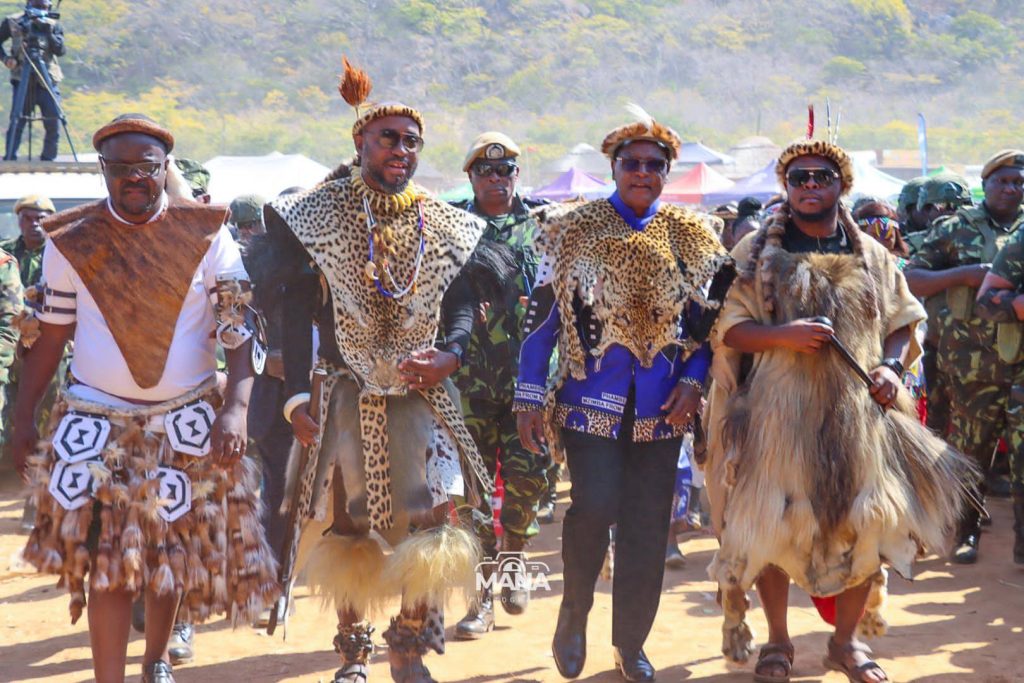
The facility, guided by a comprehensive master plan, is expected to host the annual Umthetho Cultural Festival while opening up investment opportunities in tourism, hospitality and sports.
Hora, already home to Umthetho, is set to become more than a ceremonial venue. M’mbelwa V envisions a place where culture meets commerce, allowing visitors to experience Ngoni traditions, cuisine, dance and history in a setting designed to generate sustainable economic value.
But perhaps more striking than the project itself is the approach.
M’mbelwa V has made it clear that the future of cultural tourism lies not in handouts but in structured partnerships.
“We are looking for partnerships, not just sponsorships,” he said, calling on the corporate sector to invest in a model that creates shared value.
“Investors must see returns beyond prestige. This is about building something lasting.”
The tournament itself, which raised about K80 million, was more than a fundraiser. It was a statement of intent that culture, when properly packaged, can attract serious investment.
Umthetho Cultural Festival organising committee chairperson William Nuka echoed this vision, describing the festival as a national platform with growing economic significance.
“This is not just about playing golf, it is about raising essential funds for the festival, which brings together people from all walks of life, not just the Ngoni people of Mzimba,” he said.
He added that cultural heritage remains central to identity and development.
“Umthetho provides a platform for networking, celebrating our traditions through dance and deepening our understanding of our history,” said Nuka. He added that the overwhelming support for this year’s tournament reflects growing public and corporate confidence in cultural initiatives.
Significantly, standing beside M’mbelwa V at the event was his traditional “elder brother”, Gomani V of the Maseko Ngoni, whom he had invited as Guest of Honour—a gesture commentators say symbolised far more than courtesy.
“It reflected a deepening alliance between the two Ngwenyamas, one that is quietly reshaping cultural leadership in Malawi,” observed iMpi Kandi Padambo, general secretary of the Maseko Ngoni Heritage Trust.
Earlier this year in Ntcheu, Gomani V outlined a vision similar to the one M’mbelwa V announced at the tournament.
During an iMbizo convened at his Lizulu headquarters in January, Gomani V spoke of opening his cultural space to the public through the development of chalets, the establishment of a museum-style cultural centre and the creation of platforms where visitors can immerse themselves in Ngoni life through storytelling, dance and cuisine.
Like M’mbelwa V, Gomani V is blending tradition with enterprise. His message has consistently emphasised discipline and productivity as the foundation of cultural pride.
While affirming the place of customs such as traditional beer, he has stressed responsibility, urging young people to work, build sustainable livelihoods and celebrate only after achieving economic independence.
It is an approach that signals a generational shift, presenting culture not as nostalgia but as a living, structured economy.
Together, the two leaders are redefining what it means to be Ngwenyama in modern Malawi. Young, charismatic and increasingly aligned, they are using their influence to bring their kingdoms closer together—M’mbelwa in the north and Gomani in the centre and parts of the south—while projecting a unified cultural identity on the national stage.
Their collaboration is also gradually breaking down traditional silos.
Events such as the M’mbelwa Royal Golf Tournament and the Umthetho Cultural Festival are no longer merely regional gatherings but national platforms attracting business leaders, policymakers, tourists and people from diverse backgrounds.
M’mbelwa V’s invitation to corporate players to attend this year’s Umthetho Festival from August 5 to 8 forms part of a broader strategy to position cultural festivals as investment showcases.
Cultural tourism, long discussed but rarely developed in a structured way, is now being presented as a viable driver of Malawi’s socio-economic development.
As Gomani V hinted in a recent interview, the Maseko Ngoni’s uMhlangano will be next. He has pledged to make the festival bigger and better as it marks its 14th edition since its inception in 2012.
The public is taking notice.
Social media reactions following the Lilongwe event reflected a growing sense of pride, with many praising the two Ngwenyamas for “taking big steps in revamping our culture”.
For a country seeking new pathways to economic growth, the message from Hora to Lizulu is becoming increasingly clear: culture, when driven by vision, unity and strategic investment, can be more than heritage—it can be an industry.
If the momentum continues, the partnership between M’mbelwa V and Gomani V may well mark the beginning of a new chapter, one in which tradition does not merely preserve the past but actively builds the future.