The Malawi Human Rights Commission (MHRC) has invited public nominations to fill upcoming vacancies, signalling the transition to its ninth cohort of commissioners.
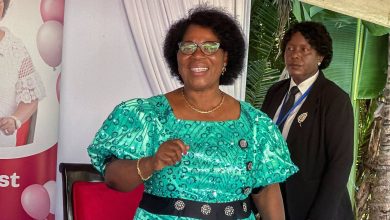
In a notice dated May 15 2026 co‑signed by Law Commissioner Rosemary Kanyuka and Ombudsman Grace Malera, the call was made under Section 4 of the Human Rights Commission Act and the country’s Constitution. The notice says the vacancies arise as the tenure of the current eighth cohort draws to a close.
“The organisations listed below are invited to nominate up to two persons [one male and one female] who are independent, non‑partisan and of high professional integrity and standing, from within or outside the nominating organisation, for consideration for appointment as a member or members of the Human Rights Commission [the Commission]. The nominating organisations should provide full names, contact details and curriculum vitae of the person they nominate. The person(s) so nominated should have sound knowledge of human rights,” the notice reads in part.
The call, extended to 150 organisations, requires that all nominations be submitted within 30 days of May15. Appointed individuals will be announced after the selection process is completed.
“A list shall finally be published in the Gazette containing the names of the organisations which will have submitted nominations, the names of persons nominated, the names of persons formally appointed by His Excellency the President, the names of persons put on the reserve list and the resultant membership of the Commission. Persons appointed as members of the Commission shall serve a term of three years,” the notice adds.
Organisations invited to nominate include human‑rights and legal groups such as the Malawi Law Society (MLS), Centre for Human Rights and Rehabilitation (CHRR), the Women Lawyers Association and Youth and Society (YAS). Governance and watchdog bodies, including the Human Rights Defenders Coalition (HRDC), Centre for Democracy and Economic Development Initiatives (CDEDI) and the Public Affairs Committee (PAC), are also on the list, alongside religious organisations such as the Muslim Association of Malawi, the Catholic Commission for Justice and Peace (CCJP) and the Anglican Council in Malawi.
Human‑rights lawyer Alexious Kamangila said MHRC stands at the pinnacle of human‑rights protection and urged nominating organisations to propose candidates of high moral standing.
“MHRC is the mother of human‑rights defenders in Malawi and its commissioners are like the Cabinet that moves the human‑rights agenda. Those nominated should have a clear and consistent track record of protecting and promoting human rights, a vision and strategy for advancing human rights in Malawi, and integrity of the highest standards. No commissioner should be appointed on a partisan ticket, and nominees should be cleared by the ACB as corruption‑free,” he said.
The current commissioners were appointed on August 26 2023. They are: Viwemi Chavula (also executive director of the Centre for Civil Society Strengthening); veteran journalist Teresa Ndaga (former chairperson of the Media Institute of Southern Africa‑Malawi); Andrew Javala (director, Malawi Network of Older Persons Organisation); Sunduzwayo Madise (deputy vice‑chancellor, University of Malawi); disability‑rights activist Scader Louis; and human‑rights lawyer Chikondi Chijozi, who serves as the commission’s chairperson.
MHRC is one of the country’s key governance institutions and comprises nine commissioners— seven appointed members with voting rights while the Law Commissioner and the Ombudsman serve as ex‑officio members. Commissioners serve three‑year terms and are eligible for reappointment for one additional term.
According to the Human Rights Commission Act, half of the former commissioners are to be reappointed to ensure continuity within the commission

Malera. I Nation