Energy expert Kandi Padambo has questioned government’s plan to revive Power Market Limited (PML), arguing that establishing a dedicated “single buyer” makes little economic sense for a power market with less than 600 megawatts capacity.
Padambo, a former Escom chief executive officer, said in an interview last week that Escom’s internal, ring‑fenced buying unit already functions effectively, and spinning it off into a fully‑fledged entity would only add unnecessary costs.
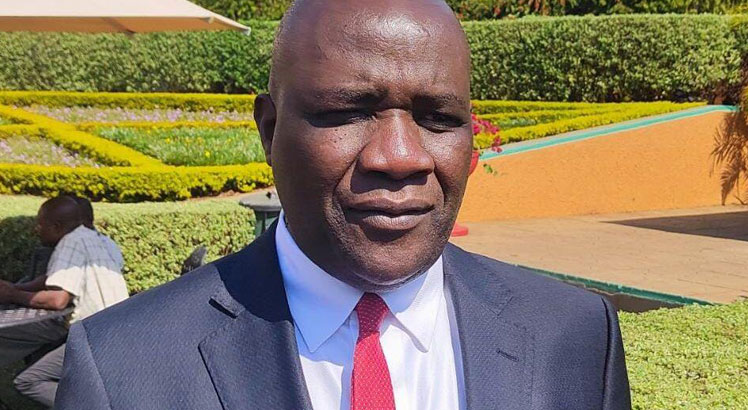
“The new company will need offices, a chief executive officer, management, a board and vehicles. Economics teaches us there is no such thing as a free lunch,” he noted.
He warned that larger regional markets have already experienced the “folly of unbundling for the sake of unbundling,” urging government to provide a clear strategic justification. For Malawi’s fledgling energy sector, he stressed, stability and investor confidence should be the priority.

The Ministry of Energy has dismissed concerns over costs. Spokesperson Joana Thaundi said PML requires no fresh capital since operational funds are already embedded in electricity tariffs approved by the Malawi Energy Regulatory Authority (Mera).
“This single buyer tariff component is designed to cover operational costs, market administration and settlement functions,” she explained, adding that Escom currently maintains a ring‑fenced account for single‑buyer revenues.
Thaundi emphasised that the main hurdles are institutional shifts, regulatory clarity, and operational separation rather than capital mobilisation.
“Once PML becomes fully operational and receives regulatory approval, these funds will be transferred to the entity,” she said.
She further clarified that Section 20(b) of the Electricity Act and existing market rules already provide for an independent single buyer.
In June 2023, Escom projected operational costs for the single buyer licensee at K22.49 billion for the 2023–2027 regulatory period. During that time, Escom and the then‑suspended PML jointly proposed a 99 percent tariff hike, though Mera ultimately approved a 50.8 percent increase spread over four years.
The Ministry also dismissed reports of a “turf war” between Escom and PML over Power Purchase Agreements (PPAs), saying the issue was a misinterpretation of roles during the transition. Under the law, the single buyer has exclusive authority to negotiate and sign PPAs with Independent Power Producers (IPPs), while Escom will focus on transmission, distribution, and system operations.
Energy analyst Grain Malunga warned last week that government faces a steep challenge in rebuilding investor confidence after PML’s three‑year hiatus. He described the 2023 decision to dissolve the entity as politically motivated, arguing that such instability has branded Malawi’s energy sector as high‑risk.
The High Court recently cleared the way for PML to resume its role as the nation’s single electricity buyer after the Attorney General successfully reversed the company’s voluntary liquidation.
PML was incorporated on June 25 2018 and secured a single‑buyer license from Mera in December 2020 under the 2016 Electricity Amendment Act. Its creation was a cornerstone of power sector reforms tied to the $350.7 million Millennium Challenge Corporation energy compact.
Despite its strategic importance, the company faced resistance from inception. In 2021, the Escom Staff Union threatened a nationwide shutdown, claiming the creation of a separate buying entity was unlawful. By early 2023, the MCP administration dissolved PML, reverting the single‑buyer function to Escom.