What began as a routine upgrade of Blantyre Police Station has spiralled into a high‑stakes public finance malfeasance that could cost taxpayers double the original contract value, Weekend Nation investigations show.
The project, scheduled for completion in April 2022, remained an unfinished three‑storey shell with works at 76 percent as of December 2022. Yet, somehow, works certified for payment stood at nearly 98 percent, according to documents we have seen and in-depth interviews with well-placed sources in government ministries involved in the project.
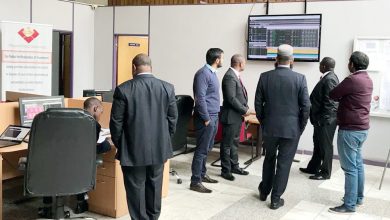
The execution of the contract started on April 15 2019 and was supposed to be concluded by April 15 2022, but our visit to the site on February 5 this year, the same day top Ministry of Homeland Security officials also toured the project , showed that the structure is far from completion.
In fact, Minister of Homeland Security Peter Mukhito, who was part of the tour; told Weekend Nation in an interview that the money already disbursed is now close to K6 billion and that an additional K4 billion is required to finish the works.
If approved, the total public cost for the station would total K10 billion, prompting one structural engineer with project management expertise to question whether there is value for money in such a project while worrying about stewardship of public funds.

project | Bobby Kabango
“In terms of lost value for money, you may say as a country we have lost an opportunity to construct this office within a manageable budget. But in construction terms, value is more than the actual expenditure; it accounts for the retain period of the structure. Thus, we are spending a lot more than we could but we have not completely lost on value,” the engineer said.
Payment records and a technical audit of the project point to procedural breaches, suspicious interim payments and large purchases that far exceed the original budget and well ahead of actual works.
The documents show that the contractor—City Building Contractors (CBC)—was certified for K5 223 772 006.85, about 97.8 percent of the accepted contract value, which was K5 339 074 504.13, exposing a wide gap between work completed and what should have been paid for.
Our investigation has also uncovered a pattern of oversight failures and conflict of interest. For example, the Ministry of Homeland Security, the project client, placed the Director of Buildings in the Buildings Department of the Ministry of Transport and Public Works in the dual role of project manager and consultant.
That concentration of responsibilities effectively removed independent supervision and made it easier to certify payments without reliable verification of on‑site progress[an2] , a structural engineer familiar with such work, confided to us but asked for anonymity.

project’s visual plans
Despite payments amounting to nearly the full contract value, construction stalled at around 70 percent when the technical report was conducted, before later ticking to the 76 percent, where it is now stuck.
CBC managing director Tony Farias said there has been no activity on site since early 2024, attributing it to lack of funding.
The technical report corroborates long periods of inactivity: it records seven months of dormancy—from April to November 2019—caused by design issues, yet shows three interim payment certificates (IPCs) were certified during that zero‑activity period, a development the structural engineer said was an anomaly.
Near‑total payment for minimal work
Contract rules require the contractor to prepare IPCs detailing completed work, with the project manager verifying those claims. On this project, however, IPCs 03–24 were prepared not by CBC, but by a quantity surveyor in the project manager’s office—a clear breach of protocol. CBC prepared only the first two IPCs, the report says.
The structural engineer also told us that it is improper for a project manager to prepare or edit IPCs.
“IPCs are supposed to be prepared by the one working on the project, in this case, the contractor. After preparing them, he gives them to the project manager and the project manager is supposed to supervise what is being claimed in the IPC,” he said.
Advance payments were authorised for large quantities of materials without the required supporting schedules. IPCs 01–06, for example, included material claims totalling K984 840 000, yet the certificates lacked the schedules needed to verify those claims. The combination of advance payments and absent documentation created a mechanism by which funds could be released without corresponding progress on site.
The technical audit report also documents misuse of Architectural Instructions (AIs). Of 105 AIs issued, only five provided construction guidance; the remaining 100 appear to have been used as de facto payment orders rather than technical directives.
Vehicles, allowances and questionable expenditures
The project’s Bill of Quantities (BoQ) allowed K100 million for vehicles, but procurement records show K231 244 566.66 was spent on multiple vehicles, including two Toyota Hiluxes and two Nissan NP300s.
On January 14 2020, according to the report, there was a cheque to N. Mwaisunga of Guardian Angel Enterprises for the purchase of second-hand vehicles for structural engineer and clerk of works amounting to K11 million.
On 15 July 2019, a Nissan NP3004X4D was bought for the project manager amounting to K30 million. On August 11 2021, the project funded the procurement and supply of Nissan NP300-AR005 YD 2.5 4WD D/C plus safety spec for project manager and client amounting to K32 714 999. 99.
On August 22 2022, there was a cheque payable to Toyota Malawi Limited for purchase and supply of two motor vehicles (Toyota Hilux 2.4 4X4 Double Cab Manual at K157 529 566.67), reads the report in part.
The audit found no evidence that the project manager formally communicated these purchases to the Ministry of Transport and Public Works or presented the vehicles to the client, which was the Ministry of Homeland Security.
“There is no information that indicates any adjustments to the project budget. It clearly indicates that there was an over‑expenditure on the item for purchasing vehicles,” the report states.
Under sub clause 42.1 of the General Conditions of Contract (GCC) that guides the process, it indicates: “The contractor shall submit to the project manager monthly statements of the estimated value of the work executed and materials on site, less the cumulative amount certified previously.”
While sub clause 42.2 says: “The project manager shall check the contractor’s monthly statement and certify the amount to be paid to the contractor.”
The technical report observed that the contractor had spent seven months (from April 15 to November 2019) without working after mobilisation due to issues with the designs, yet three IPCs were certified between March 26 2019 and October 2 2019.
The report says IPC 01 was raised before the contractor had mobilised to site and was not submitted as an advance payment.
“IPC’s 02 and 03 were raised during the period when there was no activity on site because the contractor was waiting for issuance of design information,” says part of the report.
The technical report says attempts were made to examine all the IPCs paid to the contractor to verify if adjustments were made on such works that were paid in advance, but the process was stopped by the Homeland Security Ministry.
Going through IPCs 01 to 06, the technical report notes that a summary of the value of claimed materials on site that were certified on IPC’s 01-03 were in excess of K300 million per IPC. These are according to what was claimed in July, October 2019, May, June and July 2020.
On the project manager expenditure, the technical report received a copy of BoQ for evaluation where they observed some changes.
They also accessed AIs that were issued to the contractor and had issued orders to make various payments for the project manager team.
Other flagged payments include university fees for an individual, allowances for professional conferences, hotel accommodation away from the project area, large supervision teams (at one point 32 members, including a guard), fuel card recharges, airtime, and electronic equipment, expenditures, the report says, were authorised through AIs and purchase orders without adequate justification.
Disputed certifications and halted verification
The technical report notes that IPC 01 was raised before the contractor had mobilised to site and that IPCs 02 and 03 were certified during periods when there was no physical activity because the contractor awaited design information.
Attempts to examine all IPCs to verify adjustments for works paid in advance were reportedly blocked by the Ministry of Homeland Security.
A summary of IPCs 01–06 shows claimed material values in excess of K300 million per certificate, according to claims made between July and October 2019 and into mid‑2020, figures the audit treats as anomalous given the documented inactivity.
Ministry defends payments and delays
The Ministry of Transport and Public Works spokesperson Chikondi Chimala defended the contract administration process, saying the contractor does not prepare IPCs, but applies for payment through interim valuation claims, and that the project manager’s quantity surveyor prepared IPCs 01–24 as part of contract administration.
Chimala confirmed payment for nine AIs issued to the contractor, which he said related to capacity building, project manager equipment provision and supervision, items he described as budgeted and approved, though he acknowledged some payments, such as airtime, were not honoured.
On the apparent certification of IPCs during periods of limited physical activity, Chimala argued the contractor had established site offices, deployed plant and machinery, submitted insurance and performance bonds, and engaged key staff—activities he claimed are contractually quantifiable even when visible construction is suspended.
He cited Covid‑19 lockdowns, supply‑chain disruptions, labour shortages, currency devaluation, inflation and funding delays as factors that affected progress and cash flow.
Regarding the vehicle over‑expenditure, Chimala said the BoQ provided a provisional sum intended to cover purchase and running costs such as insurance, servicing and fuel and that several purchase instructions were later reversed. He maintained that, to date, only one vehicle had been procured at K30 million.
Chimala also disputed claims that IPC 01 was certified before contract commencement, saying the contract formally began on March 12 2019 and that IPC 01 was prepared and certified on March 25 2019, 13 days after the start date.