Malawi Revenue Authority (MRA) has rued porous borders, infrastructure and connectivity constraints alongside increasingly sophisticated cross-border fraud networks, saying these factors are frustrating efforts to combat smuggling and illicit trade.
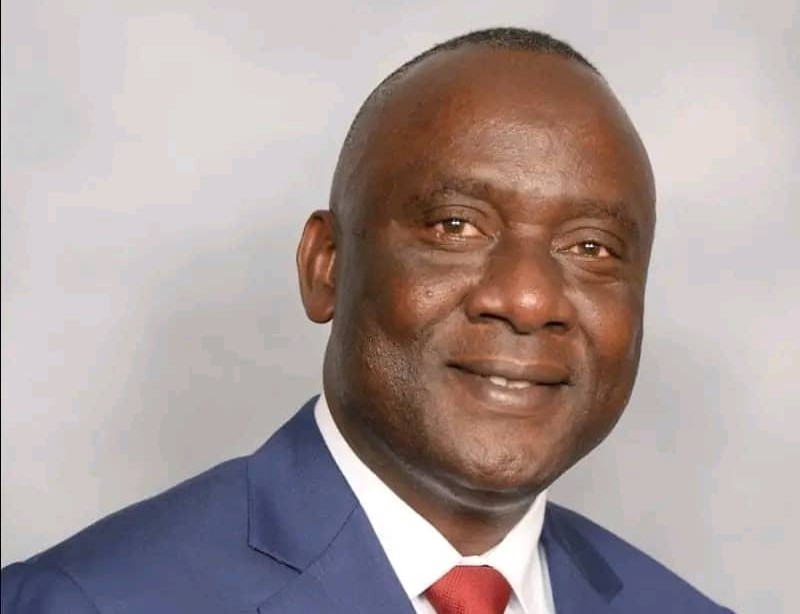
Briefing the Parliamentary Committee on International Relations in Lilongwe yesterday, MRA Deputy Commissioner General Allans Nkhoma said the public tax collector requires stronger legal backing, modern surveillance technology and enhanced regional cooperation to effectively tackle illicit trade and protect government revenue.

“MRA requires investment in scanners, drones and surveillance systems, border infrastructure, intelligence systems, legal penalties and regional data exchange,” he said.
In a presentation to the committee, the MRA team said that under the Southern African Development Community (Sadc) Free Trade Area, Common Market for Eastern and Southern Africa (Comesa), African Continental Free Trade Area (AfCFTA) and World Trade Organisation (WTO) agreements, Malawi has an obligation to combat smuggling, counterfeit goods, origin fraud, undervaluation, misclassification as well as transit diversion.
The team said the efforts are required to be undertaken in a manner that does not create barriers.
Further, the presentation indicated that MRA has made progress in implementing the agreements, with 98 percent of Malawi’s Sadc tariff reduction commitments already aligned and the remaining sensitive tariff lines expected to be addressed by December 2026.
MRA said the reforms are already yielding results. During the 2025/26 financial year, the authority collected K4.40 trillion against a target of K4.32 trillion, representing 102 percent performance and a 44 percent increase from the previous year.
Domestic taxes generated K3.28 trillion against a target of K3.18 trillion while customs revenue reached K1.12 trillion against a target of K1.13 trillion.
The authority further reported that its Integrated Selectivity Management System, which uses risk profiling to identify high-risk consignments, helped increase assessed customs revenue by 74 percent between May 2025 and May 2026. Revenue generated through the system rose from K52.27 billion to K90.77 billion.
However, MRA said implementation of trade commitments continues to face significant challenges, including porous borders, limited scanners and surveillance equipment, infrastructure and connectivity constraints, skills gaps, corruption risks and weak regional data-sharing systems.
Committee vice-chairperson Frank Mwenifumbo said lawmakers would consider reviewing legislation to address challenges affecting trade facilitation and revenue collection.
“We will look into that. Revise maybe some pieces of legislation where it is necessary until they are comfortable,” he said.