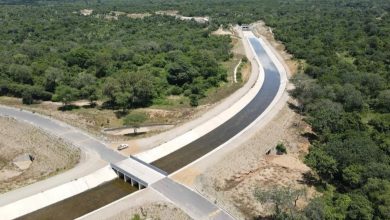
Under a blazing sun, maize fields in Kasoni Village west of Malawi’s capital city, Lilongwe, remain green despite dry spells.
Group village head Kasoni, a farmer leading eight villages, established swales, stone contour bunds and soak pits to harvest rainwater in readiness for dry spells that once scorched surrounding fields.
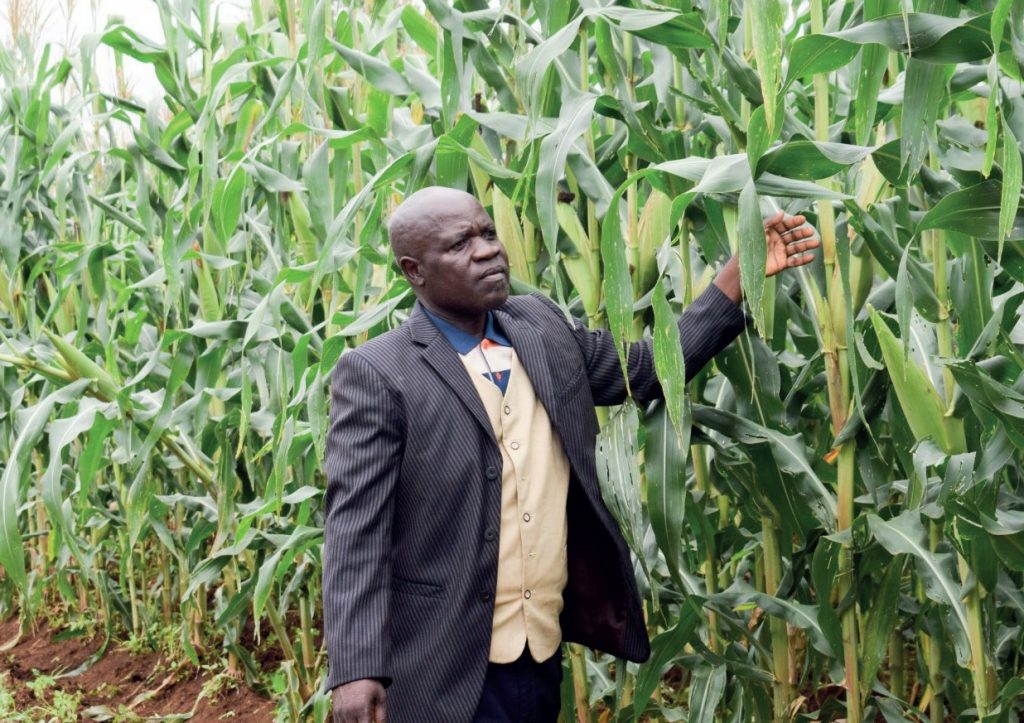
The facilities conserve soil moisture by trapping running rainwater to soak into the ground for crop health instead of carrying fertile topsoil into Bua River.
“It’s pathetic that we were complaining about hunger when scanty rainwater was just flowing downhill, washing away fertile soils and crops,” says Kasoni.
Concurring, maize grower Collette Binwell says the communal rain harvesting facility helped to save her crop from recent dry spells.
“I hope to get a good harvest despite the dry spell,” she says.
Binwell long endured chronic hunger due to dry spells, flooding and barren soils.
“For once, I am assured of a good harvest despite the prevailing dry spells,’ she states.
The rural community established the land and water conservation facilities two years ago under the guidance of government officials.
Ministry of Agriculture director of land resources conservation McPherson Nthara says such simple strategies help farmers harvest more from their small plots amid climate change.
“Parts of the country have experienced dry spells for over the past two weeks, but these rain harvesting technologies help crops withstand the water stress,” he says.
The ministry is promoting an integrated catchment management approach in all the 28 districts.
The initiatives include the Sustainable Agriculture Production Programme (Sapp) and the Climate-Smart Enhanced Public Works Programme.
Nthara states: “The land conservation initiatives have reached about 75 percent of four to six million farming households across the country.
“There are still areas we need to reach, but government cannot do it alone. We need partners to scale up these efforts to reduce land degradation, enhance climate resilience and minimise disasters such as floods.”
Sapp promotes agricultural commercialisation among smallholder farmers in Balaka, Lilongwe, Mzimba and Zomba to improve productivity.
“We can’t talk about commercialisation without improving productivity. To improve productivity, we must first conserve the land and ensure farmers have access to improved inputs,” says Sapp national coordinator Rex Baluwa.
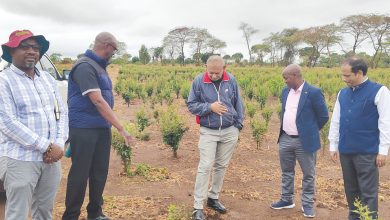
He was impressed with the healthy crop in Lilongwe West at the peak of a recent dry spell.
“I’m impressed with the farmers’ rain harvesting efforts. The resilient crop shows they are taking the necessary steps to improve their crop yields,” said Baluwa.
The swales, stone bunds and half-moon structures slow run-off to sink into the soil, allowing crops to survive prolonged dry periods that have become more repeated and severe with climate change.
“With climate change, people now see how farmers who have embraced rain harvesting and land conservation are benefitting from these simple technologies,” says Nthara.
Through training, field demonstrations and partnerships, uptake has steadily improved. The ministry says adoption is now happening both through government outreach and organically, as farmers witness results in neighbouring fields.
Sapp also supported about 22 000 households to access subsidised fertiliser and improved maize seed.
The programme distributed about 2.2 metric tonnes of fertiliser and hybrid seed.
“Improved inputs, coupled with land and water conservation, contribute to bumper yields, food security, better nutrition and increased incomes,” says Baluwa.
Kasoni’s catchment area gives a glimpse of community resilience to climate.
Agricultural experts at Sapp say simple, locally adaptable technologies, combined with improved inputs and strong partnerships, could be the difference.