Thembinkosi Manda, a 16-year-old Form Four student at Katoto Secondary School in Mzuzu, values her health rights.
Having seen her peers struggle to enjoy their sexual and reproductive health rights (SRHR), she has joined the push for youth-friendly policies.
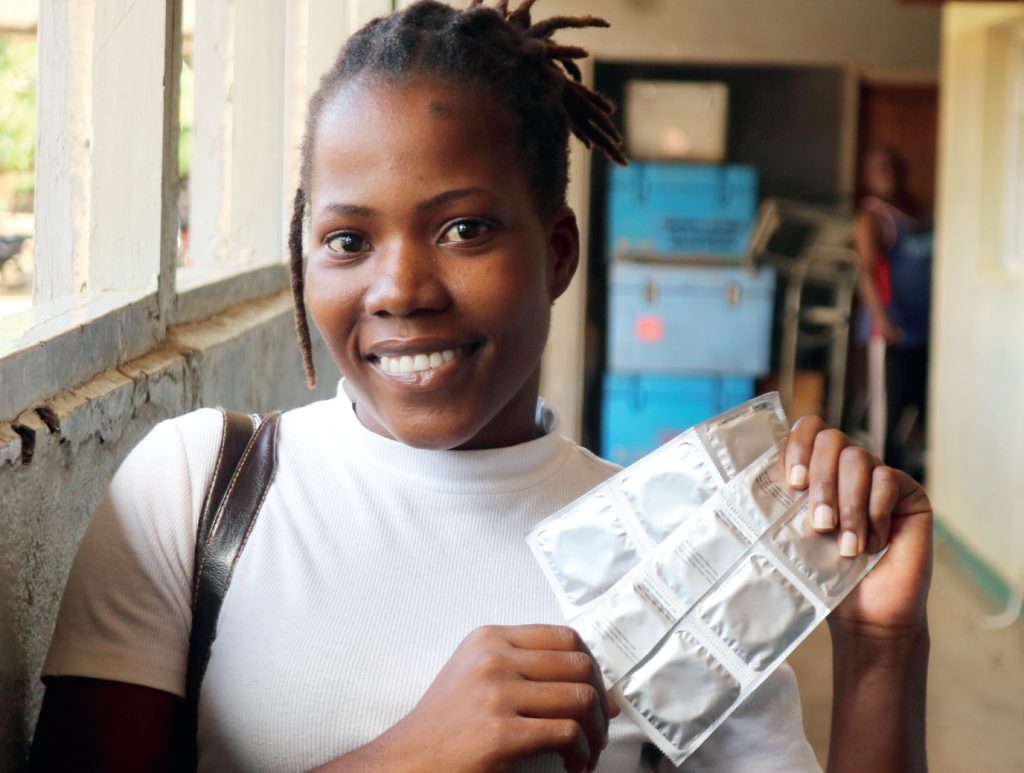
Thembinkosi wants secondary school students allowed access to SRHR services on campus.
She believes contraceptives and sexual information cannot divert young people’s attention from school to risky sexual activity.
Rather, she is convinced that accessible SRHR commodities and information can help the youth understand how their body work and protect themselves.
“I wish students who need SRHR services could access them within their schools,” says Thembinkosi. “Our needs are different and it is no longer a secret that parents know that their children are sexually active.”
Strangely, the Ministry of Education, Science and Technology teaches SRHR issues in schools, but the National Education Policy prohibits SRHR services, including condoms and contraceptives, within 100 metres.
The Gender Equality Act of 2013 provides the right to adequate sexual and reproductive health services, including contraception and protection from sexually transmitted infections.
However, the national policy only allow provision of contraceptives in colleges.
This presents a silent barrier for sexually active girls and boys in secondary school who require SRHR information and services in a safe and friendly setting.
Thembinkosi finds the blanket policy disconnected from reality.
Another Form Four student Agnes Munthali says schools should let students make independent but informed decisions.
“The policy is a huge barrier. It feels as though our rights are taken away. Keeping SRHR services out of campus only works for those who don’t the services,” she says.
Katoto Secondary School teacher-mentor and matron Josephine Kitalo opposes the calls for the policy change.
“As teachers or parents, we tell students, especially adolescent girls, that we went through the changes they are going through, but the best way is to abstain. If they cannot abstain, there are services provided outside the school campus. Our aim is just to guide them so that they achieve their life goals,” she says.
Life Skills teacher Ndaziona Ngalande says providing SRHR in schools “is as good as exposing students to sexual activities”.
“While we advise them to use condoms if they cannot abstain, we do not encourage sexual activities,” she says.
Outside Mzuzu City, students freely get SRHR information and services in safe zones such as Nkhorongo Teen Space at Nkhorongo Health Centre.
Youth-friendly health services (YFHS) coordinator Vinjeru Mhango says the safe space discreetly assists all adolescents who drop in without discrimination.
She says: “We believe that adolescents have the right to access accurate sexual and reproductive health information and services in a safe and confidential environment.
“We do not ask whether a client is a student or not. What matters is that the young person receives appropriate, respectful and confidential care.”
Centre for Human Rights and Rehabilitation (CHRR) executive director Michael Kaiyatsa says the 100-metres rule creates a barrier for young people who lack the resources, privacy or confidence to seek services off-site.
“In reality, the policy does not stop young people from being sexually active. Instead, it makes them more vulnerable to unintended pregnancies, unsafe abortions and STIs, including HIV,” he says.
CHRR advocates the review of the policy to align with prevailing laws, evidence and lived realities.
Kaiyatsa states: “The Gender Equality Act clearly guarantees these rights. Our Constitution protects the rights to health, dignity, equality and access to development.
“Rights do not evaporate simply because a young person walks through a school gate. If anything, schools are places where structured, safe and supervised access can be provided most effectively. Policies that make it harder for adolescents to access essential health services risk undermining those protections.”
Youth and Society (YAS) promotes SRHR in Mzuzu with funding from the Mercury Phoenix Trust.
According to YAS head of programmes Mwandida Theu, the initiative targets Mzuzu University, University of Livingstonia, Mzuzu Urban Health Centre, Zolozolo Clinic as well as Katoto and Target secondary schools.
The National YFHS Strategy of 2022-2030 shows that 13 percent of girls and 22 percent of boys aged between 15 and 19 have had their first sexual encounter before their 15th birthday.
Up to 59 percent of women and 53 percent of men aged between 18 and 24 reported to have had sex before 18 years.
Mercy Nzotoma of Chimbamila Village in Chikwawa regrets quitting school due to a teen pregnancy. Today, she is part of a youth-friendly section at Ngabu Health Centre, where she gets SRHR services, including family planning.
“Some of the mistakes I made as a teenager could have been avoided if I had known then what I know now,” says the 23-year-old. “I was doing well in school, but my friends would laugh at me because I didn’t have a boyfriend.”