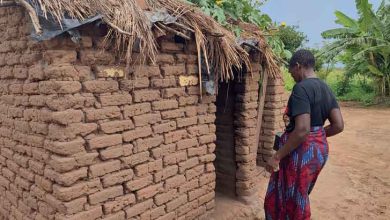
Across the sun-drenched plains of Mchinji this April, the landscape is a patchwork of gold and green. It is harvest season in Malawi, when the air carries the dust of threshed grain and the steady rhythm of winnowing.
For many farmers, this marks the end of months of hard labour. For Faith Kamanya, it is only the beginning.
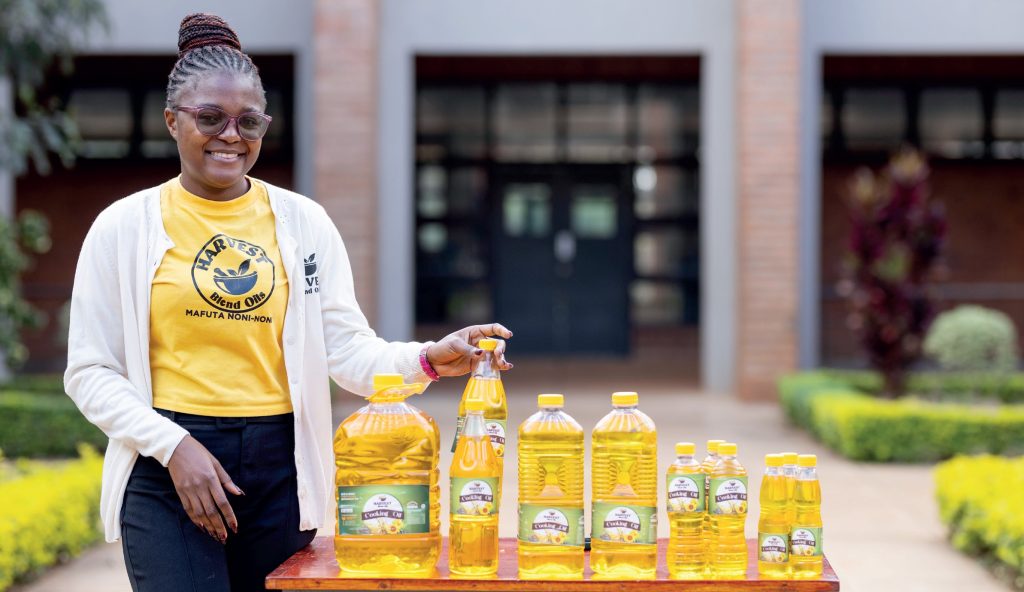
In Mchinji Boma, Kamanya is reshaping what it means to add value to agriculture. As founder of Harvest Blend Oils, she is addressing a long-standing paradox: Malawian farmers grow sunflower and soya, yet often rely on costly imported cooking oil. Her goal is simple—to keep that value within the community, one bottle at a time.
Her journey began with frustration. Growing up, she watched her father work tirelessly in sunflower fields, only for much of the harvest to go unsold due to unreliable markets. “I saw this gap and felt compelled to act,” she says. “It wasn’t because there were no producers, but because there was room for improvement.”
Turning that idea into a business proved difficult. Her first attempt at oil production yielded just 10 litres from 50 kilogrammes of sunflower seeds—dark oil that reflected both technical challenges and financial loss. Doubts from others followed. “In the beginning, I lacked the resources and technical knowledge,” she recalls. “Many people doubted me and mocked my ambition.”
Instead of giving up, Kamanya sought training and mentorship. The Zanchito Programme helped her develop early prototypes, but her breakthrough came through the Youth Employment in Fast-growing Fish-farming in Africa (Yeffa) programme and support from Agra. A study tour to Senegal, including participation in the Africa Food Systems Summit, exposed her to improved production methods and new ways of engaging consumers.
“That experience helped me visualise the future of my business,” she says. “I was impressed by how producers educated and connected with consumers.”
Today, Kamanya runs a growing enterprise employing 12 people, with a focus on youth and women. Her business supports 30 smallholder farmers, providing seeds and training. In a model rooted in fairness, she offers discounted cooking oil to the same farmers who supply her raw materials, ensuring they benefit directly from the finished product.
“I believe farmers should also enjoy the quality oil made from their crops,” she says.
Kamanya’s vision goes beyond production. She is building a “closed-loop” system where nothing is wasted. The oil cake left after pressing is turned into animal feed, which she plans to use in poultry and fish farming. Manure from these activities will return to the fields as fertiliser, creating a sustainable cycle that cuts costs and protects the environment.
Despite progress, challenges persist. Her current machine processes only 50 kilogrammes per day, limiting output. To meet demand, she sometimes transports raw materials to Lilongwe—an expensive process that reduces her margins. Yet demand continues to grow, with her oil reaching as far as Likoma Island, where cooking oil is scarce and often imported.
For Kamanya, such reach defines success. “It is not just about profit,” she says. “It is about impact—how far the product spreads and how many lives it improves.”
Looking ahead, she plans to triple production to 1,500 litres within a year and secure certification from the Malawi Bureau of Standards. She is also organising a community campaign to educate farmers and consumers on the benefits of locally produced, high-quality oil.
To young women considering similar paths, Kamanya offers a candid message. The journey, she says, demands resilience. “Manufacturing requires patience and continuous improvement. Sometimes you feel like giving up, but if it is your dream, you will find a way to achieve it.”
Amid the bustle of harvest season, Kamanya’s work stands as a reminder that the true value of agriculture lies not only in growing crops, but in transforming them. For her, each bottle of oil represents more than a product—it is a step toward community dignity and economic independence.
“Having my cooking oil in supermarkets will be a moment of pride,” she says. “Not just for me, but for the people of Mchinji who have seen this journey from the start.”