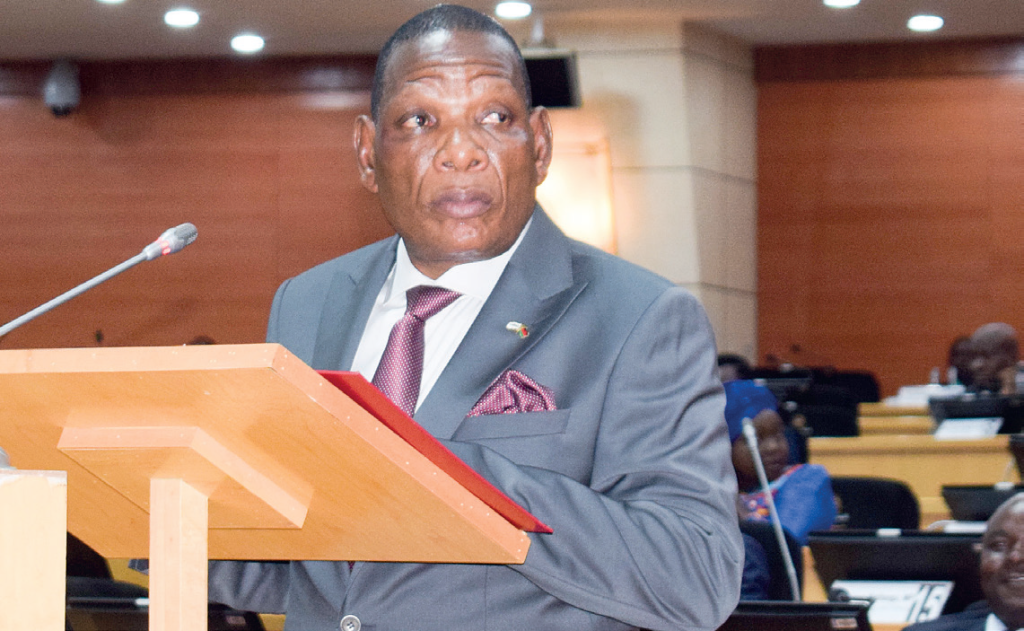
Malawi Government yesterday formally unpacked the National Economic Recovery Plan (Nerp), with Minister of Finance, Economic Planning and Decentralisation Joseph Mwanamvekha warning that its success hinges on tackling underlying structural challenges.
The minister highlighted chronic foreign exchange shortages, lack of fiscal discipline and unlocking new sources of long-term investment finance as some of the structural challenges demanding urgent attention.
Mwanamvekha expressed the sentiments at Bingu International Convention Centre in Lilongwe yesterday during a consultation session on Nerp 2025-2030 with stakeholders.
He said: “Let us be honest with ourselves as a nation. The economic situation we are facing today did not emerge overnight.
“The challenges we are confronting are deep, structural and accumulated over many years and exacerbated in the past five years.”
On the other hand, the stakeholders argued that economic recovery will require difficult reforms and stronger policy coordination across government institutions.
Mwanamvekha said the Democratic Progressive Party (DPP) administration inherited an economy facing severe macroeconomic pressures upon the September 16 2025 General Election.
ourselves as a nation. | Mana
He mentioned rising debt, high inflation rate, widening fiscal deficits and dwindling foreign exchange reserves as some of the pressure points.
The minister said public debt had increased to K24 trillion from K4.1 trillion in 2019 while foreign exchange reserves had fallen from more than four months of import cover in 2019 to less than one week in September 2025.
Mwanamvekha further said inflation had peaked at 30 percent while debt-servicing obligations had risen to levels consuming more than half of domestic revenues.
Reserve Bank of Malawi Governor George Partridge, who was part of the meeting, stated that Malawi’s foreign exchange crisis may be more complex than a simple shortage of United States dollars.
He argued that foreign currency continues to circulate within the economy, but distortions in pricing and demand have created severe market pressures.
“If the country doesn’t have foreign exchange, the first sign and symptom is that you see most of the supermarkets are empty,” said Partridge, a former chief executive officer of National Bank of Malawi plc who also at went on to head the bank’s main shareholder conglomerate Press Corporation plc.
He contended that the main problem with Malawi’s economy is not availability of foreign exchange, but the pricing rate.
Partridge linked the forex pressures to years of rapid money supply growth, excessive borrowing and fiscal imbalances that increased demand for foreign currency.
“Fifty-one percent money supply growth while your GDP [gross domestic product] is growing at less than two percent tells you a lot about the pressure that you are putting on foreign exchange in terms of demand,” he said.
Partridge also said the central bank is reviewing some foreign exchange regulations and surrender requirements, warning that excessive controls can undermine market efficiency.
“[With] excessive controls, you actually lose control,” he said.
Business leaders said the recovery plan should be accompanied by reforms that improve competitiveness, investment conditions and private sector productivity.
Malawi Confederation of Chambers of Commerce and Industry CEO Daisy Kambalame told delegates that economic recovery would depend on addressing long-standing bottlenecks affecting production, exports and business growth.
“Economic recovery is not a government project. It is a national project that requires deliberate collaboration between government and the private sector,” she said.
Chipping in, Bankers Association of Malawi representative Temwani Simwaka said financing Malawi’s recovery would require greater use of capital markets alongside traditional bank lending.
“Where banks are unable to finance long-term projects, the Stock Exchange is in the right position to mobilise resources,” she said.
The discussions highlighted a growing concern that Malawi’s economic challenges cannot be solved through short-term interventions alone.
Mwanamvekha acknowledged that recovery would require painful, but necessary reforms.
“There comes a time when a nation must choose between temporary discomfort associated with reforms and permanent economic decline caused by inaction,” he said.
By the end of the conference, stakeholders are expected to submit recommendations before government finalises the recovery framework, which is expected to guide efforts to restore macroeconomic stability, revive productivity and support private-sector-led growth between 2025 and 2030.
Nerp seeks to restore macroeconomic stability and drive private-sector-led growth. The five-year strategy tackles fiscal and debt challenges while targeting single-digit inflation and a 6.5 percent GDP growth rate by 2030.
The plan is intertwined with Malawi 2063, the country’s long-term development strategy which seeks to transform the economy into “an inclusively wealthy, self-reliant, industrialised upper-middle-income nation by 2063” and a lower middle-income one by 2030.
To ensure an economic rebound, the plan proposes a shift from traditional subsidies toward fully developed, solar-powered commercial irrigation corridors, establishment of anchor and mega farms by expanding contract farming and agro-processing clusters for maize, soya, rice and cashew to guarantee market access and exports.