St Luke’s Anglican Hospital at Malosa in Zomba is on course to become the first health facility in the Eastern Region to provide blood-cleaning for kidney disease patients.
The hospital last week received four dialysis machines and accessories that remove toxic impurities from blood.
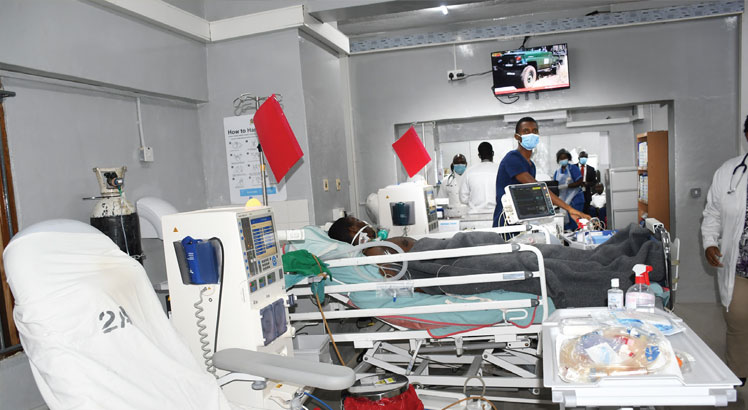
In an interview, hospital administrator Winasi Boma said the facility has procured three machines at about K3 billion.
“We will roll out dialysis on November 1 this year,” he told The Nation. “All necessary resources are in and installation by our suppliers from Jilo in South Africa starts next week.. We wanted six machines and four are in.”
According to Boma, the hospital acquired the scarce machines in partnership with the Dia-Tech, owned by Blantyre-based Malawians.
“This idea comes in recognition of the fact that the entire Eastern Region has no dialysis machine. As a non-profit hospital, we want to complement government to decongest sites that provide the life-saving service and put dialysis close to kidney disease patients in our region,” he stated.
Only two public health facilities—Kamuzu Central Hospital (KCH) in Lilongwe and Queen Elizabeth Central Hospital in Blantyre—provide free dialysis for free (See the sidebar for other providers).
Patients from the Northern and Eastern regions endure costly travels across provincial boundaries to get their blood purified.
Carol Kachilonda, a nurse at Mangochi District Hospital who was diagnosed with kidney failure during her studies at Mzuzu University, has asked for a transfer to Lilongwe for easy access to dialysis.
“Since June 2023, I was supposed to attend three dialysis sessions every week, but I’m limited to two because KCH machines are not enough to support many of us,” she told The Nation.
Zomba Central Hospital (ZCH) refers patients from four eastern districts—Zomba, Phalombe, Machinga and Mangochi—to QECH’s overwhelmed dialysis machines that frequently break down.
“QECH’s dialysis machines might be fully booked or down and Zomba might not have fuel to transport patients. At times, the patient is too critical to be transferred,” Dr Rittah Pleasant Mario, from ZCH, told The Nation last year.
However, a K50 billion public-private partnership to equip all central hospitals with dialysis machines has stalled partly due to forex scarcity.
The forex squeeze also delayed St Lukes’ project by a year, Boma revealed.
Paul Banda can afford a smile again
Past tenses say it all—Alleluia Band founder Paul Banda is getting better with easy access to dialysis while awaiting a kidney transplant.
“The situation was critical,” he says. “We didn’t know where to go and what to do. But when we appealed for help, many Malawians intervened. They continue to help us today. Thank you.”
The legendary singer and guitarist transformed Balaka into a go-to music town, but swapped his hometown for Blantyre in 2023 to edge closer to dialysis machines at Queen Elizabeth Central Hospital (QECH) while waiting for a kidney transplant.
“We thank God. Since I came to Blantyre, I have improved tremendously,” he says with a smile.
Dialysis removes toxic impurities from blood, keeping kidney patients healthy until they get transplants.
However, the life-saving procedure remains a spring too far for patients beyond Blantyre and Lilongwe. Those from the North and East cross regional borders to get the service.
Banda left his musical hometown to evade the agony of travelling 248 kilometre twice weekly.
The desperate shift mirrors how sketchy kidney disease treatment uproots and impoverishes patients.
The hospital trips and bills pile up as the disease renders patients too weak to work.
Banda recalls seeing “angels of death” after skipping dialysis because he could not afford the 124km trip from Balaka to QECH.
He told Mibawa TV: “I was so sick that I collapsed outside my house and on a sofa. I was saved by my brother, Lucius.
“He swiftly phoned Mwaiwathu Hospital to put a team on standby and paid them for working overtime so that I could get dialysis promptly. They worked all night and I woke up around 4am.”
Banda’s young brother and Zembani Band founding leader Lucius died of kidney failure on June 30 2024. Until his demise in a South African hospital, he was an adviser to former president Lazarus Chakwera, who offered to help Banda get a kidney transplant, but did not.
“Several people offered their kidneys, but the President’s aide advised us to choose four. They went for tests and everything, from kidney tissue to blood groups, matched, but nothing happened until he was voted out,” he says.
The father of one now relies on financial assistance from friends and fans to undergo dialysis twice a week at QECH. He wakes up as early as 3am and departs home by 6am to go for dialysis—the artificial kidneys.
However, his tenacity conceals a harsh reality that haunts Malawians with chronic kidney disease: No hospital in Malawi transplants kidneys.
“A transplant is the only solution,” he says. “If you help me to go to India for a transplant, this will be history. Dialysis is a lifetime cost that reduces kidney patients to beggars.”
The Chikhirisitu Chimalira Nkhondo hitmaker, who used to fill venues and raise funds for building churches, has not entered a prayerhouse since he left Balaka three years ago.
He thanks his wife, Loveness, for supporting him since December 2020 when high blood pressure triggered diabetes and a minor stroke before kidney failure.
The couple thanks well-wishers who fund the hospital trips and philanthropist Asante Mtalimanja who pays all housing bills in Chileka.
“We thank everyone who have been supporting our day to day life since we left Balaka three years ago. MayGod bless them,” said the wife.