Malawi’s environmental governance framework is facing renewed scrutiny as government continues to delay the operationalisation of the Environmental Appeals Tribunal (EAT), a body mandated to resolve disputes arising from environmental decisions.
The EAT is a specialised quasi-judicial institution established under the Environmental Management Act (EMA) to handle appeals linked to environmental impact assessments (EIAs) and related regulatory decisions. Yet, nearly three decades after its conception, the tribunal exists only on paper.

No regulatory accountability
Analysis of government records and expert input shows that the failure to establish the tribunal has quietly weakened regulatory accountability and limited public access to environmental justice.
The idea of the tribunal dates back to 1996, when government adopted the National Environmental Policy (NEP) and enacted the EMA. A central pillar of the policy was the creation of a dedicated judicial forum to provide expert interpretation and enforcement of environmental laws.
Thirty years later, despite feasibility studies, consultations and budgetary considerations, the tribunal—provided for under Section 69 of the Act—remains non-functional.
In its absence, environmental disputes are handled by conventional courts. However, experts argue these courts are often overburdened and lack the technical expertise required to deal with complex ecological matters. This has resulted in delays and weakened enforcement of environmental regulations.
Under the law, the EAT is supposed to hear appeals against decisions made by the Minister, Director or environmental inspectors. Without it, access to “green justice” remains limited.
Although the tribunal is not operational, the Environmental Affairs Department (EAD) website includes a “Tribunal Registry,” which is said to facilitate access to rulings and enforcement of tribunal decisions—despite the tribunal itself not existing in practice.
Efforts to obtain clarification from the Ministry of Natural Resources were unsuccessful by the time of publication. Ministry of Justice spokesperson Frank Namangale confirmed that the tribunal is not yet functional, attributing responsibility to the Ministry of Natural Resources.
“The Environmental Management Act (2017) establishes an Environmental Appeals Tribunal to handle disputes arising from environmental decisions. While the Act came into force on November 1, 2019, the tribunal has not yet been operationalised,” he said.
Gaps in governance
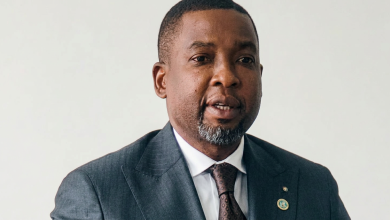
Malawi Environmental Protection Authority (Mepa) director general Wilfred Kadewa described the absence of the tribunal as a “major gap” in environmental governance.
He said the lack of a specialised forum reduces access to justice and weakens oversight of environmental decisions.
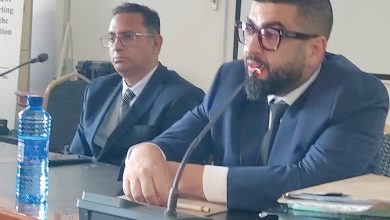
“The environmental tribunal must be operationalised to improve accountability,” Kadewa said on the sidelines of the Malawi Law Society annual conference in Mangochi.
He warned that the delay is particularly concerning at a time when environmental pressures are increasing, raising the risk of unchecked degradation and conflicts between developers and communities.
Legal consequences
Environmental law expert Ahmed Mussa warned that continued inaction risks serious legal and practical consequences.
He noted that the absence of the tribunal undermines environmental justice and the rule of law, as affected parties struggle to seek redress.
In many cases, courts decline to hear such disputes, citing lack of jurisdiction or failure to exhaust remedies предусмотрed under the law.
“These refusals are typically based on the fact that the proper legal channels—such as the tribunal—have not been used,” he explained.
Mussa added that the situation creates uncertainty, sometimes forcing parties to rely on outdated legal frameworks. He cited the mining sector, where regulatory transitions created confusion before new structures were fully implemented.
“This leads to unnecessary litigation, which could be avoided if the tribunal were operational,” he said.
He further cautioned that decisions made without a functioning tribunal could be challenged for failing to comply with legal requirements.
Compared to neighbouring countries, Mussa said Malawi is falling behind, noting that many regional peers have already established functioning environmental dispute mechanisms.
Impact on sustainability
Civil Society Network on Climate Change national coordinator Julius Ng’oma said the absence of the tribunal is worsening environmental challenges.
He pointed to weak enforcement of environmental laws, delays in resolving disputes and lenient penalties as direct consequences of the gap.
Ng’oma stressed that the situation undermines efforts to promote environmental sustainability and justice.
“It becomes difficult to effectively address environmental problems when there is no dedicated mechanism to resolve disputes and enforce accountability,” he said.