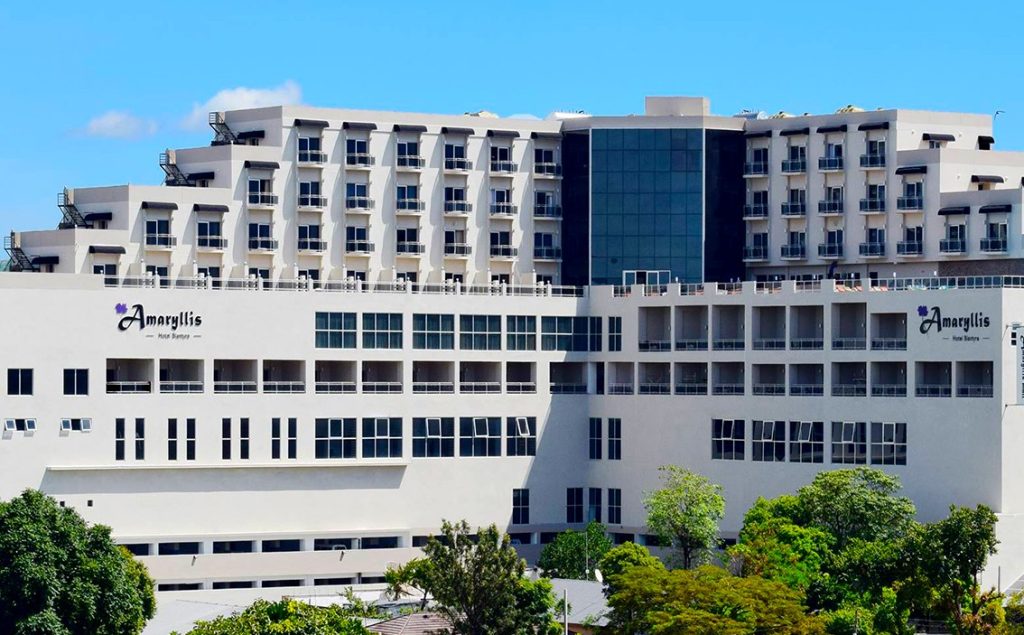
The High Court’s Financial Crimes Division has thrown out a fresh attempt by Amaryllis Hotel to force the government to unfreeze its bank accounts, ruling on Thursday that the hotel’s legal team failed to follow the most basic rules of court procedure—including signing their own legal papers.
Justice Redson Kapindu described the application filed by Yusuf Investments Limited, the owner of Amaryllis Hotel, as “utterly defective” and “misconceived under the law.”
In a stinging rebuke, the judge directed the court registrar to return all documents to the hotel’s lawyers, GK Associates, decreeing that the papers “shall be taken not to have been filed”.
This ruling is the latest twist in a burgeoning scandal that has raised serious questions over the management of public pension funds.
Authorities are currently investigating how the Public Service Pension Trust Fund (PSPTF) acquired the property for a staggering K128.75 billion—a price nearly three times higher than independent valuations.
As investigations intensified, the Financial Intelligence Authority (FIA) and the Anti-Corruption Bureau (ACB) moved to freeze approximately K38.5 billion held in accounts linked to the hotel.
In a desperate counter-move, Yusuf Investments rushed to court seeking a mandatory injunction—a high-stakes legal order that would have compelled the National Bank of Malawi to restore full access to the accounts immediately while the main case continues.
However, Justice Kapindu halted the proceedings before they could even begin, pointing out several critical “rookie” errors.
In a direction issued in chambers in Lilongwe, the judge noted that the application lacked the signature of either the company or its legal counsel.
“The absence of the putative claimant’s signature, or that of the responsible legal practitioner, is a clear defect on the face of the application and therefore an irregularity,” Kapindu ruled.
He explained that the freezing orders were made under the Financial Crimes Act (FCA) and the Corrupt Practices Act (CPA)—both of which prescribe specific procedures for challenging such actions.
The hotel, however, ignored those provisions and filed a general civil claim instead.
“The process pursued by the applicant herein is not the due process as envisaged under both the FCA and the CPA,” the judge said.
He noted that while the hotel filed a “summons (specially endorsed),” it also attached a separate “statement of case”—a move he described as “conceptually irreconcilable” and evidence of “utter procedural confusion.”
Justice Kapindu also observed that the hotel sought to have the injunction heard without notifying the ACB or the FIA. He stressed that the law is clear: such applications must be made on notice to all parties.
Despite dismissing the application, Justice Kapindu left the door open for the hotel to reapply, provided it follows the correct legal procedures.
“If the applicant still seeks relief from the decisions made by the putative defendants herein, then they should make appropriate applications as envisaged under the respective pieces of legislation,” he said.
The Amaryllis Hotel deal has intensified scrutiny over the management of pension funds. The Public Service Pension Trust Fund paid K128.75 billion for the hotel, even after the Reserve Bank of Malawi ordered the fund to halt the transaction.
Nico Asset Managers withdrew from the deal, citing “liquidity risks,” while independent valuations reportedly placed the property’s value between K30 billion and K47 billion.
The ACB reopened its investigation in March after fresh evidence emerged during parliamentary hearings. The FIA traced K72.6 billion linked to the transaction before freezing the accounts.
FIA spokesperson Patience Lunda asked for more time to consult.
Meanwhile, the bureau’s acting director general Gabriel Chembezi has said it will oppose any application by the hotel to unfreeze the accounts.
The hotel’s lawyers, GK Associates, had not responded to requests for comment by press time.