The Malawi Confederation of Chambers of Commerce and Industry (MCCCI) says the country’s subdued economic growth remains insufficient to generate jobs for the estimated 270 000 young people entering the labour market each year.
In its First-Half Economic and Business Review 2026, the chamber says even if the government achieves its projected economic growth rate of 3.8 percent this year, the expansion would only marginally outpace the country’s annual population growth of about 2.6 percent, limiting gains in incomes, poverty reduction and employment creation.

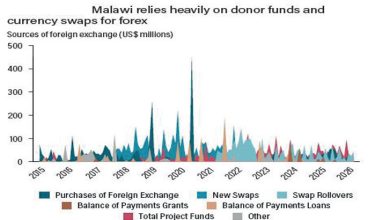
MCCCI says the fragile economic recovery continues to be constrained by foreign exchange shortages, high production costs, unreliable electricity supply, rising fuel prices, elevated public debt and tight monetary policy, with manufacturing, wholesale and retail trade among the sectors hardest hit.
The review states: “With an estimated 270 000 young people entering the labour market each year, the current pace of economic expansion remains insufficient to generate adequate formal employment opportunities, underscoring the urgent need for structural reforms that enhance productivity, diversify exports, strengthen domestic value addition and improve the business environment.
“Looking ahead, downside risks remain elevated, including renewed increases in global fuel prices, prolonged foreign exchange shortages, climate-related shocks, fiscal pressures and weaker global demand, all of which could further moderate economic growth during the remainder of 2026.”
Recently, the World Bank revised Malawi’s 2026 growth forecast downwards to 2.3 percent, a 0.3 percentage point reduction from its January projection, citing the impact of escalating geopolitical tensions in the Middle East, higher global fuel prices and commodity market disruptions on import-dependent economies such as Malawi.
The World Bank said higher energy prices are expected to intensify inflationary pressures, increase production and transport costs, and place additional strain on the country’s fiscal and external balances.
The International Monetary Fund (IMF) also projects Malawi’s economy to grow by about 2.2 percent, reflecting persistent inflationary pressures, foreign exchange constraints and weak private sector activity.
“These projections suggest that achieving the Government’s growth target will require a stronger-than-expected recovery in agriculture and exports, alongside sustained macroeconomic stability,” MCCCI says in the review.
Recently, the African Development Bank (AfDB) said Malawi’s growth outlook remains vulnerable to both external and domestic shocks that could slow the expected recovery.
Among the key risks are US reciprocal trade tariffs and aid cuts, delays in resolving the debt crisis, and climate-related shocks, which could undermine fiscal stability, infrastructure investment and agricultural recovery.
Mzuzu University economist Christopher Mbukwa said the divergence between government and international organisations’ growth forecasts reflects the political commitments governments seek to fulfil and the assumptions underpinning their projections.
Minister of Finance, Economic Planning and Decentralisation Joseph Mwanamvekha acknowledged in his 2026/27 National Budget Statement that the country’s economic outlook remains cautiously positive.