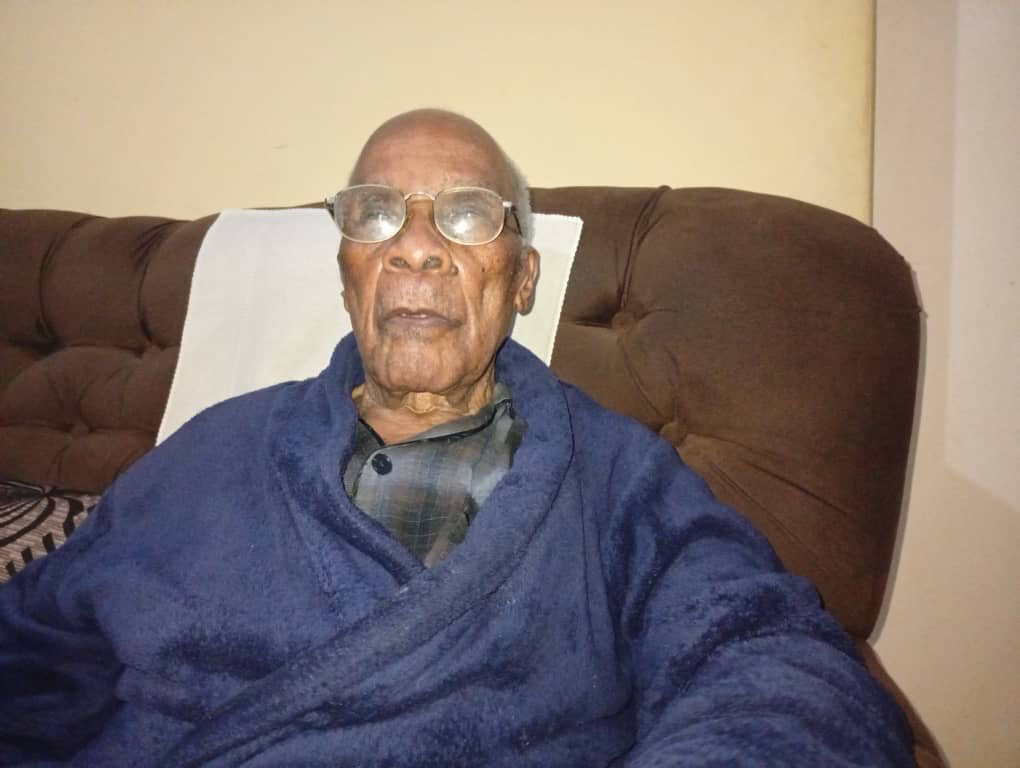
He has lost much in life — among it his eyesight and a beloved daughter, Rubina, whose memory remains vivid more than a decade after her death. Yet, 22 years after leaving active politics and retiring from public service, he has retained what many half his age struggle to keep: a sharp memory and an eye for detail. Now 93, the veteran politician, historian and former civil servant was Malawi Broadcasting Corporation’s (MBC) first black director general. Our correspondent FATSANI GUNYA visited SAMUEL DONALD KALIYOMA PHUMISA at his retirement home in Ntcheu, where he reflected on power, detention, leadership and Malawi’s enduring dependency syndrome. Excerpts:
How would you like to be known?
A It depends on who is asking, and for what reason [laughs]. I remain Samuel Donald — SD Kaliyoma — with Phumisa as my clan name. Some call me Angoni. Over my lifetime, I have been a businessman, a public servant, a politician and a historian. Above all, I am a loving husband to my wife, NyaMhango, whom my ancestors named Nankhoma when she first faced them in the late 1960s. We now live quietly here in Ntcheu.
How have you been?
I cannot complain. God has been gracious to me. Reaching 93 this year, God willing, is testimony enough. I have outlived many friends and foes, which brings both gratitude and sadness. Apart from Bakili Muluzi, most of those I worked with in politics, academia and business are gone.
My wife has played a major role in my longevity. I married my best friend. After more than 50 years, we are still lovers. I did not merely exist; I truly lived.
Briefly take us through your career.
I was shaped by Dr Hastings Kamuzu Banda. I served under him and built my life during his era. Kamuzu valued education at any cost, and I am a product of that philosophy. I attended Blantyre Secondary School, then Munali Secondary School in Zambia as part of its first Form Six class, before proceeding to Fort Hare under Rhodes University, where I studied History, English and Politics around 1960. I became head teacher of Blantyre Secondary School and later joined the civil service, rising to what would today be Principal Secretary level. In 1969, Kamuzu personally asked me to help reform MBC. Our goal was a broadcaster that served the people, not a few elites. That work ultimately led to my detention without trial after nearly a decade at the institution. Later, under the Muluzi administration in a democratic Malawi, I held several ministerial portfolios, including Deputy Minister of Health and Finance, before serving as Minister of Labour, Housing, Trade and Industry, Transport and Public Works, and Information. Throughout that period, I also served as Member of Parliament for Ntcheu North East Constituency until my retirement from politics in 2004.
What happened during your detention?
I do not like dwelling on it. It remains one of the most painful episodes of my life. It was politically motivated. I was detained at Zomba Central Prison for close to a year. I was not physically abused, and my family was looked after. My wife was even allowed to visit. Still, the experience hurt deeply. Eventually, the truth emerged. Kamuzu apologised to me personally at Sanjika and offered me any position I wanted — ministerial or otherwise. I declined. I retired permanently and returned to Ntcheu to focus on business. Years later, Muluzi found me at my shop and persuaded me to re-enter politics. I hesitated, having been a career civil servant, but the opportunity to help dismantle the one-party system was irresistible. It was never personal against Kamuzu. The rest is history.
How did MBC survive during your absence?
That is a memory that still comforts me. I had no broadcasting background when I took over MBC, but I accepted the challenge. During my detention, Lucius Chikuni served as caretaker, later handing over to the late Tony Kandiero after his return from the BBC.
MBC still largely operates on the structure we built then, though I cannot confidently comment on its editorial independence today. I still love the station and tune in whenever I can.
Did you expect Kamuzu to concede defeat during the referendum and the first multiparty election?
Honestly, no. We feared bloodshed. But he conceded gracefully, to the disappointment of some around him who had committed atrocities. Kamuzu told me he had no knowledge of my detention, and I believed him. He apologised sincerely. He had faults, yes, but I prefer to focus on the positives.
How did you help build the first democratic government?
Once the one-party system was removed, I felt my job was done. But Muluzi insisted that we stay. He had vision and remarkable charisma. He listened, understood his limitations and knew how to bring together professionals, business leaders, chiefs and religious figures. That is why the UDF government worked. Leaders must listen and resist arrogance. Power belongs to the people.
Any regrets about where Malawi is today?
Not many. God gave me life and I lived it fully. What pains me is that decades later we remain beggars as a nation. Aid and foreign loans have robbed us of dignity. Hunger and dependency make democracy hollow. Why should Malawi, with all its resources, rely on others — even war-torn countries — for food? We could be Africa’s food basket. Without self-reliance, we will never be truly free.